By PluzGroup | Industrial Equipment Experts
If you’ve ever been in a workshop or on an industrial site, you’ve probably heard someone say, “Just grab the impact wrench” when faced with a stubborn bolt. And in many cases, that’s perfectly fine. But when it comes to precision bolting, safety-critical applications, or high-torque fastening, an impact wrench isn’t just inadequate — it can be dangerous.
So what’s the real difference between a hydraulic torque wrench and an impact wrench? When should you use one over the other? And why do hydraulic torque wrenches cost so much more?
This guide breaks down everything you need to know — from how each tool works to which one is right for your specific application.
The Core Difference: Precision vs. Speed
Let’s cut straight to the heart of it.
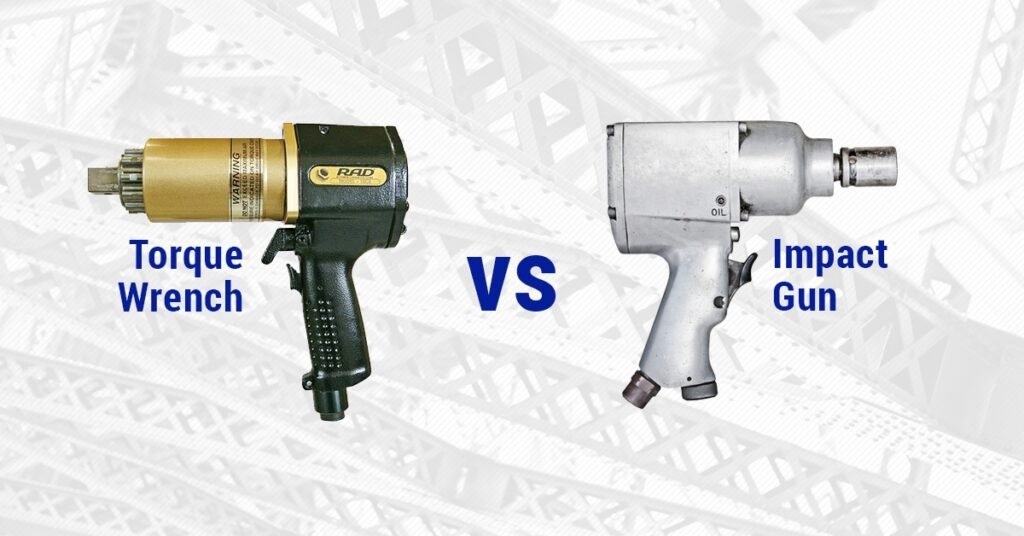
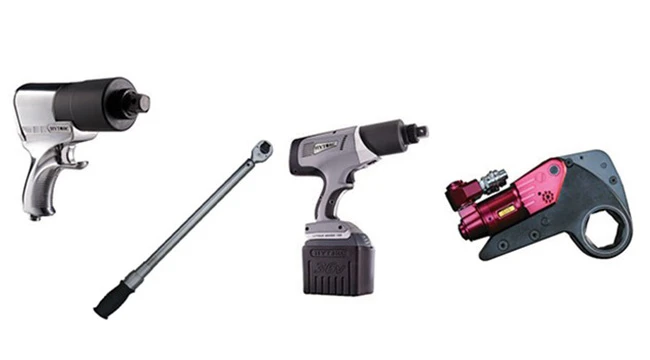
Impact wrenches are designed for speed and convenience. They deliver high rotational force through rapid, repetitive hammer-like impacts. They’re excellent for tasks where you need to remove or install bolts quickly and where exact torque values aren’t critical.
Hydraulic torque wrenches are designed for precision and control. They deliver smooth, continuous torque through hydraulic pressure, allowing you to tighten bolts to an exact specification — often within ±3% accuracy. They’re essential for safety-critical joints, high-pressure flanges, and any application where bolt load uniformity matters.
Think of it this way: an impact wrench is like a sledgehammer — powerful, fast, and great for demolition. A hydraulic torque wrench is like a surgeon’s scalpel — precise, controlled, and designed for critical work.
How Does an Impact Wrench Work?
An impact wrench (also called an air gun, impact gun, or rattle gun) uses a rotating hammer mechanism to deliver short bursts of torque in rapid succession. This creates the characteristic “rat-tat-tat” sound you hear in tire shops and garages.
Key Characteristics of Impact Wrenches:
Power source options:
- Pneumatic (air-powered) — most common in workshops
- Electric (corded or cordless battery-powered)
- Hydraulic (rare, used in very heavy-duty applications)
Typical torque output: 100 Nm to 3,000 Nm (consumer and professional models)
Torque delivery method: Intermittent impacts through a rotating hammer and anvil mechanism
Accuracy: Highly inconsistent — can vary by ±25% to ±50% depending on air pressure, battery charge, socket quality, and operator technique
Best for: Automotive tire changes, general assembly work, removing seized bolts, construction fastening where precision isn’t required
The Problem with Impact Wrenches for Precision Work
Impact wrenches don’t measure torque — they just deliver force until the bolt stops turning or the operator releases the trigger. This means:
- You have no way to confirm the actual torque applied
- Over-torquing can stretch or break bolts
- Under-torquing can lead to loose joints and joint failure
- Bolt-to-bolt variation is significant, even on the same flange or assembly
For a car wheel, this might not matter much (though professional tire shops often use torque sticks or manual torque wrenches for final tightening). But for a pressure vessel flange, pipeline connection, or turbine assembly? This inconsistency is unacceptable and potentially catastrophic.
How Does a Hydraulic Torque Wrench Work?
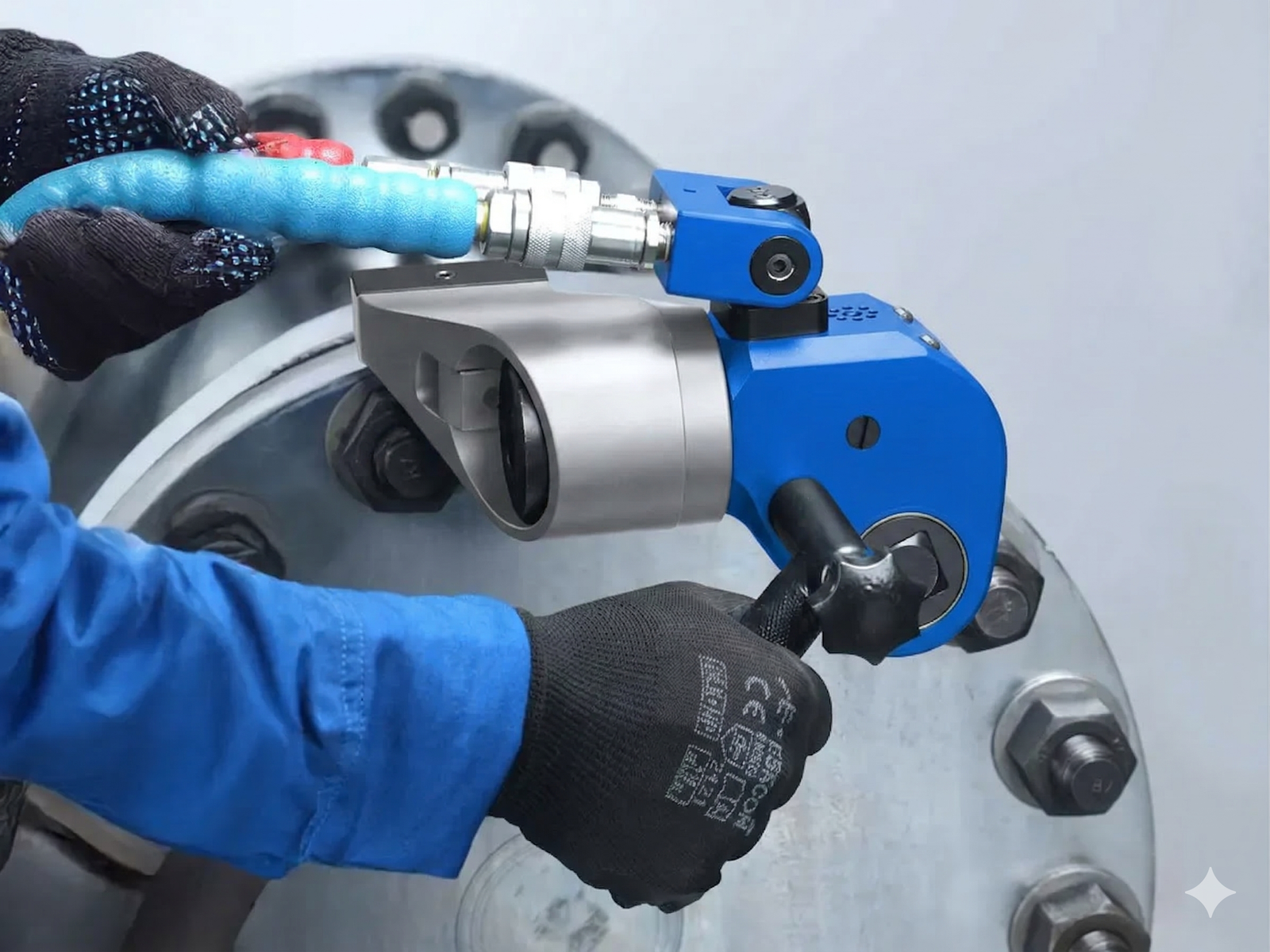
A hydraulic torque wrench uses hydraulic pressure from a dedicated pump to drive a piston inside the wrench body. This piston rotates a ratchet mechanism, applying smooth, continuous torque to the bolt until the preset pressure (and therefore torque) is reached.
Key Characteristics of Hydraulic Torque Wrenches:
Power source: Hydraulic pump (electric, pneumatic, or battery-powered)
Typical torque output: 100 Nm to 100,000+ Nm (industrial-grade tools)
Torque delivery method: Smooth, controlled hydraulic pressure converted to rotational force
Accuracy: ±3% (some premium models achieve ±2% or better)
Best for: Flange bolting, pipeline connections, wind turbine assembly, structural bolting, pressure vessels, heavy machinery maintenance, oil & gas applications
Why Hydraulic is Superior for Critical Applications
Hydraulic torque wrenches are engineered specifically for applications where bolt integrity is non-negotiable. Here’s why they’re the gold standard:
1. Exact torque control: The pump pressure directly correlates to torque output. Set the pressure correctly, and you get exactly the torque you need — every single time.
2. Repeatability: Every bolt in a multi-bolt joint receives identical torque, ensuring uniform load distribution across the flange or connection.
3. Traceability: Hydraulic systems can be calibrated and certified to international standards (ISO 6789), with documentation that meets regulatory requirements in industries like oil & gas and power generation.
4. No operator variation: Unlike impact wrenches, which rely heavily on operator technique and judgment, hydraulic wrenches deliver consistent results regardless of who’s using them.
5. Safety: No sudden reaction forces or kickback. The reaction arm absorbs the torque, not the operator’s hands and wrists.
Side-by-Side Comparison: Impact Wrench vs. Hydraulic Torque Wrench
| Feature | Impact Wrench | Hydraulic Torque Wrench |
|---|---|---|
| Primary purpose | Speed and convenience | Precision and accuracy |
| Torque accuracy | ±25% to ±50% | ±3% (up to ±2% for premium models) |
| Torque range | 100 – 3,000 Nm (typical) | 100 – 100,000+ Nm |
| Torque delivery | Intermittent impacts | Smooth, continuous pressure |
| Measurement capability | No built-in torque measurement | Calibrated and traceable torque output |
| Repeatability | Poor (high variation) | Excellent (identical torque per bolt) |
| Operator safety | Reaction force on operator | Reaction arm absorbs force |
| Noise level | Very loud (90+ dB) | Moderate (pump noise only) |
| Typical cost | $100 – $1,500 | $2,000 – $30,000+ |
| Calibration required | No | Yes (annually or per schedule) |
| Best for | Automotive, general assembly | Flanges, pipelines, critical joints |
| Regulatory compliance | Not suitable for regulated work | Meets ISO, ASME, API standards |
When Should You Use an Impact Wrench?
Impact wrenches are incredibly useful tools — when used in the right context. Here’s where they excel:
Ideal Applications for Impact Wrenches:
Automotive and tire work: Removing and installing lug nuts (though torque sticks or a manual torque wrench should be used for final tightening to spec)
General construction: Fastening structural steel bolts that will be torqued later with a calibrated tool, or where torque specifications are very loose
Demolition and disassembly: Breaking loose rusted, seized, or over-torqued bolts
Assembly line work: High-speed fastening where consistency isn’t critical (consumer goods, furniture, non-structural components)
Maintenance and repair: Quick bolt changes where exact torque isn’t specified
When NOT to Use an Impact Wrench:
- Any flange or pressure vessel connection
- Bolts on rotating machinery (turbines, engines, gearboxes)
- Structural bolts on bridges, cranes, or load-bearing joints
- Any application with a specified torque value that must be documented
- Safety-critical bolts in oil & gas, power generation, or aerospace
- Multi-bolt joints where uniform bolt load is required
When Should You Use a Hydraulic Torque Wrench?
If your application involves any of the following, a hydraulic torque wrench isn’t just recommended — it’s essential.
Critical Applications for Hydraulic Torque Wrenches:
Oil & gas pipelines and flanges: Flange joints must be torqued uniformly to prevent leaks under high pressure. Hydraulic wrenches ensure every bolt receives identical load.
Power generation: Turbine casings, generator flanges, and boiler connections require precise torque values to prevent vibration, leaks, or catastrophic failure.
Wind turbines: Hub bolts, tower flange bolts, and foundation anchor bolts must be torqued to exact specifications and re-torqued periodically.
Heavy industrial equipment: Mining equipment, crushers, mills, and presses all have high-torque bolts that must be tightened correctly to avoid costly downtime.
Subsea and offshore: Saltwater environments and extreme conditions demand precision tools that eliminate risk.
Aerospace and defense: When lives depend on it, there’s no room for error. Hydraulic torque wrenches meet stringent military and aerospace standards.
Construction and civil engineering: Bridge bolting, structural steel connections, and tower cranes require certified torque values.
Why Hydraulic Torque Wrenches Cost More (And Why It’s Worth It)
A quality pneumatic impact wrench might cost you $200 to $800. A hydraulic torque wrench system (wrench + pump + accessories) can easily run $5,000 to $30,000 or more.
So why the massive price difference?
What You’re Paying For:
Precision engineering: Hydraulic wrenches are built to tolerances that allow them to deliver ±3% accuracy consistently, even after thousands of cycles.
Calibration and certification: Every hydraulic wrench comes with a calibration certificate traceable to national standards. This documentation is legally required in many industries.
Durability: These tools are designed to operate in extreme environments — offshore platforms, underground mines, desert heat, arctic cold — and keep performing.
Safety: Impact wrenches have significant kickback and reaction forces. Hydraulic wrenches eliminate this risk entirely with reaction arm systems.
Liability protection: Using a calibrated, certified torque wrench protects your company from liability in the event of a joint failure. You can prove due diligence.
Cost of failure: A loose flange on a high-pressure pipeline can cause an explosion, environmental disaster, or fatalities. A single failure event can cost millions in damages, fines, and lawsuits. The cost of the right tool is negligible by comparison.
Can You Use an Impact Wrench with a Torque Stick?
Some users try to bridge the gap by using impact wrenches with torque sticks (also called torque limiting extensions). These are flexible socket extensions designed to flex and stop delivering torque once a certain threshold is reached.
The Reality of Torque Sticks:
Torque sticks can improve accuracy compared to an impact wrench alone, but they’re still far from precise. Accuracy varies based on:
- Air pressure or battery voltage
- Socket and extension quality
- Operator trigger control
- Bolt lubrication and thread condition
At best, torque sticks might get you within ±15% accuracy. That’s fine for automotive wheel lug nuts. It’s not acceptable for a pressure vessel.
If your application requires documented, traceable torque values, torque sticks are not a substitute for a calibrated hydraulic torque wrench.
Real-World Scenario: Flange Bolting
Let’s look at a real-world example to illustrate the difference.
Scenario: You’re bolting an 8-inch 150# flange on a natural gas pipeline. The flange has 8 bolts, and each must be torqued to 680 Nm (500 ft-lb) in a cross-pattern to ensure even gasket compression and prevent leaks.
Using an Impact Wrench:
- You tighten each bolt with the impact gun until it “feels tight”
- Bolt 1 might end up at 500 Nm
- Bolt 2 might be at 750 Nm (over-torqued)
- Bolt 3 might be at 450 Nm (under-torqued)
- The gasket is unevenly compressed
- Result: Potential leak, gasket failure, or bolt failure under pressure
Using a Hydraulic Torque Wrench:
- You set the pump to deliver 680 Nm
- You torque each bolt in a cross-pattern sequence
- Every bolt receives exactly 680 Nm ± 20 Nm (±3%)
- The gasket is uniformly compressed
- Result: Safe, leak-free joint that meets code requirements
The difference isn’t just technical — it’s the difference between a compliant, safe installation and a potential disaster.
Which Tool Should You Invest In?
Here’s a simple decision framework:
Choose an Impact Wrench if:
- You need speed over precision
- Your work involves general assembly, automotive repair, or maintenance
- Torque specifications are loose or non-existent
- You’re working on non-critical fasteners
- Budget is limited and precision isn’t required
Choose a Hydraulic Torque Wrench if:
- Your application has specified torque requirements
- You work in regulated industries (oil & gas, power, aerospace, construction)
- Joint integrity is safety-critical
- You need documentation and traceability
- You’re working with large bolts (M30 and above, or equivalent)
- Bolt load uniformity is essential (flanges, multi-bolt joints)
Consider Owning Both if:
- You run a full-service maintenance operation
- You need speed for general work and precision for critical work
- You want to maximize efficiency while maintaining safety and compliance
What About Electric Torque Wrenches and Battery-Powered Impact Drivers?
You might also come across other types of tools:
Battery-powered impact drivers: These are smaller, lower-torque versions of pneumatic impact wrenches. Great for light assembly and DIY work, but not suitable for industrial bolting.
Electric torque wrenches (with digital readouts): These are a middle-ground option. They offer better accuracy than impact wrenches (typically ±5% to ±10%) and can display torque values. However, they still don’t match the precision, power, or regulatory acceptance of hydraulic torque wrenches for heavy industrial applications.
Hydraulic impact wrenches: Yes, these exist — they combine the impact mechanism with hydraulic power for extremely high torque (up to 40,000 Nm). They’re faster than standard hydraulic torque wrenches but less accurate. Best used for rough tightening followed by precision torquing with a standard hydraulic wrench.
Maintenance and Calibration: A Critical Difference
Impact Wrench Maintenance:
- Check air pressure (for pneumatic models)
- Lubricate occasionally
- Replace worn sockets
- No calibration required or available
Hydraulic Torque Wrench Maintenance:
- Annual calibration (or per manufacturer/regulatory schedule)
- Hydraulic fluid changes
- Seal and O-ring inspection
- Pump filter cleaning
- Documentation of all maintenance and calibration events
The calibration requirement isn’t a hassle — it’s an assurance. It means your tool is performing exactly as specified, and you have documented proof.
The Bottom Line: Right Tool for the Right Job
Impact wrenches and hydraulic torque wrenches are both valuable tools — but they’re designed for completely different purposes.
If you’re changing tires, assembling furniture, or doing general maintenance work, an impact wrench is perfect. It’s fast, affordable, and gets the job done.
But if you’re torquing flanges, assembling turbines, bolting structural steel, or working on any safety-critical connection, a hydraulic torque wrench isn’t optional — it’s essential.
The cost difference between the two tools is real. But so is the cost of a failed joint, an injured worker, or a regulatory violation. When precision matters, hydraulic is the only choice.
Need Help Choosing the Right Tool?
At PluzGroup, we supply both impact wrenches for general industrial use and a complete range of hydraulic torque wrenches for precision bolting applications. Our team of technical specialists can help you assess your specific requirements and recommend the right tool for your operation — whether that’s a high-speed pneumatic impact gun for your workshop or a certified hydraulic torque wrench system for critical infrastructure.
Contact PluzGroup today for expert advice and quality industrial bolting tools you can trust.
Tags: hydraulic torque wrench, impact wrench, torque wrench comparison, industrial bolting tools, precision torque tools, flange bolting, PluzGroup