
A hydraulic torque wrench is a precision-engineered tool that harnesses hydraulic pressure to deliver controlled, high-volume torque for tightening or loosening large bolts and nuts in industrial settings. Unlike manual or pneumatic alternatives, it excels in applications requiring exact force application, such as petrochemical plants, construction sites, and heavy machinery assembly, preventing over- or under-tightening that could lead to catastrophic failures.
This comprehensive guide dives deep into its mechanics, types, applications, safety protocols, and maintenance—tailored for engineers, technicians, and SEO-optimized for queries like “hydraulic torque wrench explained” surging in UAE and India markets.
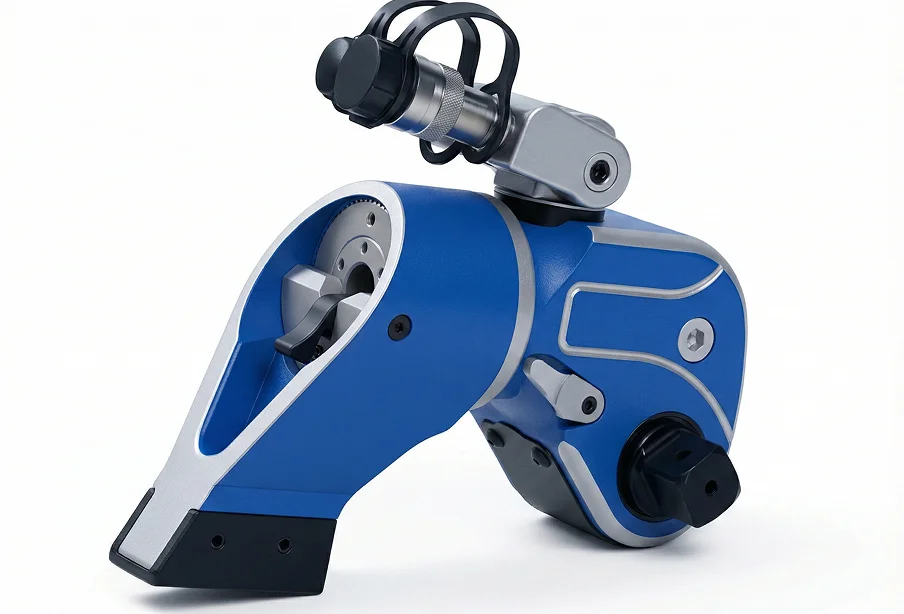
Core Definition and Evolution
Hydraulic torque wrenches emerged in the mid-20th century as industrial bolting demands escalated beyond human strength. By the 1960s, pioneers like Enerpac and Hytorc refined the design, integrating hydraulic cylinders with ratcheting mechanisms for repeatable accuracy within ±3-5% tolerances—far superior to impact wrenches’ variability.
At its essence, the tool transforms incompressible hydraulic fluid (typically oil) pressure—often 10,000 PSI—into rotational force via a piston-driven system. This “power multiplier” applies torque from 100 ft-lbs to over 100,000 ft-lbs, ideal for bolts exceeding 1-inch diameter where manual tools fail.
Historical Milestones:
- 1940s: Basic hydraulic concepts from wartime shipbuilding.
- 1970s: Square-drive models standardized for flange work.
- 2000s: Low-profile and cassette variants for confined spaces.
- 2026 Trends: Smart sensors for IoT torque monitoring in predictive maintenance.
In essence, it’s not just a wrench—it’s a safety-critical system ensuring structural integrity in high-stakes environments.
Detailed Working Principle
The magic lies in Pascal’s Law: pressure applied to confined fluid transmits uniformly. Here’s the step-by-step process:
- Pump Activation: An electric, pneumatic, or manual pump pressurizes oil in a reservoir.
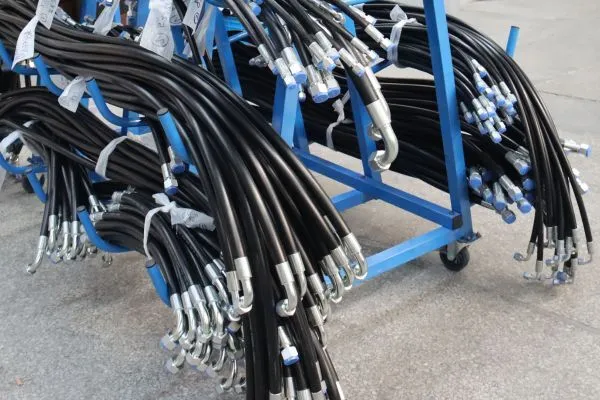
- Fluid Delivery: High-pressure hose (rated 40,000 PSI burst safety) routes fluid to the wrench’s cylinder.
- Piston Extension: Fluid forces a piston forward (1-2 inches stroke), linked to a drive pawl or spline.
- Rotation Cycle: Pawl engages a ratchet ring or hex socket, rotating the nut 5-30 degrees per stroke.
- Retraction: Pressure release retracts the piston via springs; ratchet pawls slip idly.
- Stall Condition: Cycles repeat until target pressure (per calibration chart) is hit; tool “stalls” as nut resists, preventing overrun.
For loosening (“breakout torque”), reverse rotation settings apply higher initial force, often with penetrating oil.
Square Drive vs. Nut Runner Variants:
- Square Drive: Attaches universal sockets; versatile for varied fasteners.
- Direct Nut Drive: Hex or cassette encircles nut; compact for flanges.
Visualize it: Pump hisses, piston pulses like a heartbeat, nut turns precisely—pure hydraulic symphony.
Anatomy: Key Components Breakdown
Dissecting the tool reveals engineering prowess:
- Cylinder and Piston: Heart of torque generation; chrome-plated for durability.
- Ratchet Mechanism: Precision pawls (heat-treated steel) ensure unidirectional drive.
- Reaction System: Foot or bar absorbs recoil (up to 50% of torque), preventing tool spin.
- Hoses and Couplings: Reinforced rubber/steel braids; quick-connects for swaps.
- Gauge and Relief Valve: Monitors pressure; auto-dumps excess for safety.
- Pump Unit: Electric (quiet, indoor), pneumatic (explosion-proof), or battery-powered.
Advanced Features in 2026 Models:
- Digital torque transducers for real-time data logging.
- Wireless connectivity to apps for torque curves.
- Ergonomic handles reducing operator fatigue by 40%.
Types of Hydraulic Torque Wrenches
Diversity matches industrial needs:
1. Square Drive Wrenches:
- Torque: 500-60,000 ft-lbs.
- Use: General maintenance, pipelines.
- Pros: Socket flexibility; Cons: Needs clearance.
2. Low-Profile (LP) Wrenches:
- For spaces <4 inches.
- Ideal: Flange bolting in refineries.
- Example: LP4ST model (390-2,900 ft-lbs).
3. Cassette/Industrial Models:
- Detachable head for hex nuts up to 8 inches.
- Applications: Wind turbines, bridges.
4. By Power Source:
- Electric: Continuous duty, precise speed control.
- Pneumatic: High-power in hazardous zones (ATEX-rated).
- Manual: Backup for remote sites.
Emerging: Geared vs. Non-Geared:
Geared multiply torque via planetary systems; non-geared rely on piston force alone for lighter duties.
Industrial Applications and Case Studies
These wrenches dominate where precision meets scale:
- Petrochemical: Flange bolting on pipelines; prevents leaks costing millions.
- Power Generation: Turbine alignments; ±3% accuracy ensures vibration-free operation.
- Construction: Bridge girders, crane bases.
- Mining/Shipbuilding: Anchor bolts, propeller shafts.
- Aerospace: Engine mounts (specialized low-torque variants).
Real-World Example: In UAE’s ADNOC refineries, hydraulic wrenches reduced bolting time 70% during 2025 shutdowns, averting $2M downtime.
UAE/India Relevance: With ADNOC expansions and India’s infra boom (e.g., Mumbai Trans Harbour Link), demand spikes—target keywords like “hydraulic torque wrench Dubai rental.”
Advantages Over Traditional Tools
- Accuracy: Consistent torque vs. manual “feel.”
- Power-to-Weight: 10x force at 1/3 weight of equivalents.
- Speed: 4x faster cycles in series bolting.
- Safety: No operator kickback; remote pump operation.
- Repeatability: Ideal for tension-critical joints.
Comparison Table:
Quantified: A 50-bolt flange job takes 2 hours hydraulically vs. 8 manually.
Step-by-Step Operation Guide
Mastery ensures zero incidents:
- Prep: Verify calibration (annual cert), select socket/hex per bolt size.
- Setup: Position reaction point solidly; attach hose securely.
- Pressure Set: Consult chart (e.g., 5,000 PSI = 10,000 ft-lbs); zero gauge.
- Cycle: Advance pump—watch for smooth rotation; retract between strokes.
- Verify: Stall indicates done; re-torque after 10 mins for relaxation.
- Loosen: Switch to reverse; apply breakout lube.
Pro Tip: Cross-pattern tightening for multi-bolt flanges minimizes distortion.
Safety Protocols: Non-Negotiable
High pressure = high risk; fatalities from hose bursts or pinches reported annually.
- PPE: Gloves, goggles, steel-toe boots; no loose clothing.
- Inspections: Pre-use hose checks (no bulges/kinks); 4:1 safety ratio mandatory.
- Exclusion Zones: 10ft radius; never under load.
- Training: OSHA/ISO certified operators only.
- Emergency: Relief valves auto-bleed; manual dump always accessible.
2026 Update: AI gauges alert via app for pressure anomalies.
Common Hazards:
- Injection Injuries: Fluid streams cut like knives.
- Tool Whip: Misaligned reaction causes 1,000+ ft-lbs recoil.
- Over-Torque: Use torque-limiting pumps.
Maintenance and Troubleshooting
Longevity demands ritual care:
Daily:
- Wipe clean; inspect seals.
- Bleed air from system.
Weekly:
- Lubricate pawls (light oil).
- Test gauge accuracy.
Annual:
- Full calibration (ISO 6789).
- Seal replacement.
Troubleshooting Table:
| Issue | Cause | Fix |
|---|---|---|
| Slow Stroke | Air lock | Bleed system |
| No Rotation | Slipped pawl | Realign/lube |
| Pressure Drop | Leak | Replace seals/hose |
| Overheating | Continuous use | Cycle off 15 mins |
Budget: $500/year per tool for upkeep, extending life to 10+ years.
Buying Guide: Top Factors for 2026
- Torque Range: Match job (e.g., 1,000-20,000 ft-lbs common).
- Certifications: ATEX for oil/gas.
- Brand Leaders: Enerpac, Hytorc, TorcStark—proven ±3% accuracy.
- Cost: $2,000-$15,000; rentals $200/day UAE.
- Accessories: Extension hoses, swivels.
UAE Suppliers: Local rentals via AOGS Gulf; India via HEMS.
Future Innovations
By 2030: Fully autonomous wrenches with robotics for hazardous zones; blockchain-calibrated logs for audits. Sustainability: Electric pumps cut emissions 80%.
Wrenches rotate nuts; tensioners stretch bolts axially—complementary for flanges.
One thought on “What Is a Hydraulic Torque Wrench? The Ultimate 2026 Guide”