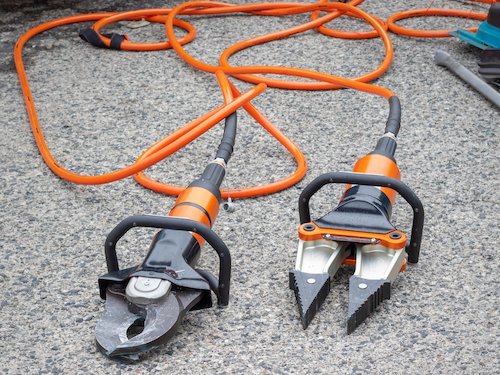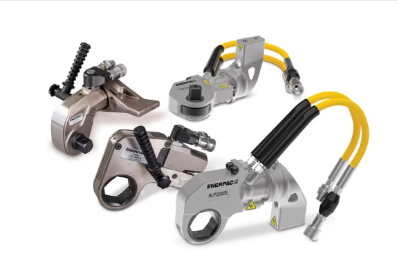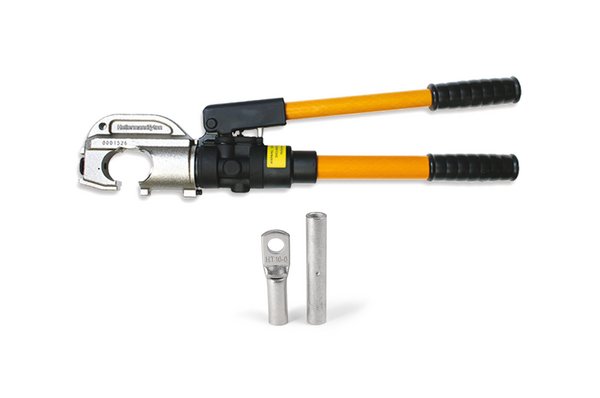
A hydraulic crimping tool is essential equipment for anyone working with hydraulic hoses, electrical cables, or industrial fittings. Whether you are assembling hydraulic hoses for heavy machinery, building custom cable assemblies, or working in automotive repair, using a hydraulic hose crimper correctly ensures safe, leak-free connections every time.
This complete guide walks you through everything you need to know — from setup and die selection all the way through to inspection and pressure testing — so you can crimp hoses and fittings with professional results.
What Is a Hydraulic Crimping Tool?
A hydraulic crimping tool — also called a hydraulic hose crimper or hydraulic press crimper — is a device that uses hydraulic pressure to compress a metal ferrule or sleeve onto a hose and fitting assembly. This process creates a permanent, secure connection that withstands high pressures without leaking.
Common applications include:
- Hydraulic hose assembly for construction, agriculture, and mining equipment
- Automotive brake lines and power steering hoses
- Industrial pneumatic systems
- Electrical cable terminations
- HVAC refrigerant lines
The crimping process deforms the metal ferrule around both the hose and the fitting insert, creating a mechanical bond that is often stronger than welding. Because of this, a correctly crimped assembly is one of the most reliable connections in any hydraulic system.
Types of Hydraulic Crimping Tools
Before diving into the step-by-step process, it helps to understand which type of crimper you are working with. Each type suits a different volume and environment.
1. Handheld Hydraulic Crimpers
Small, portable tools operated by hand pump. They are best for light-duty work, small hose sizes, and field repairs.
- Typical capacity: Up to 1-inch hose diameter
- Crimping force: 6–12 tonnes
2. Bench-Mounted Hydraulic Crimpers
Stationary tools mounted on a workbench and operated by foot pedal or hand lever. These suit workshop environments where speed and consistency matter.
- Typical capacity: Up to 2-inch hose diameter
- Crimping force: 15–30 tonnes
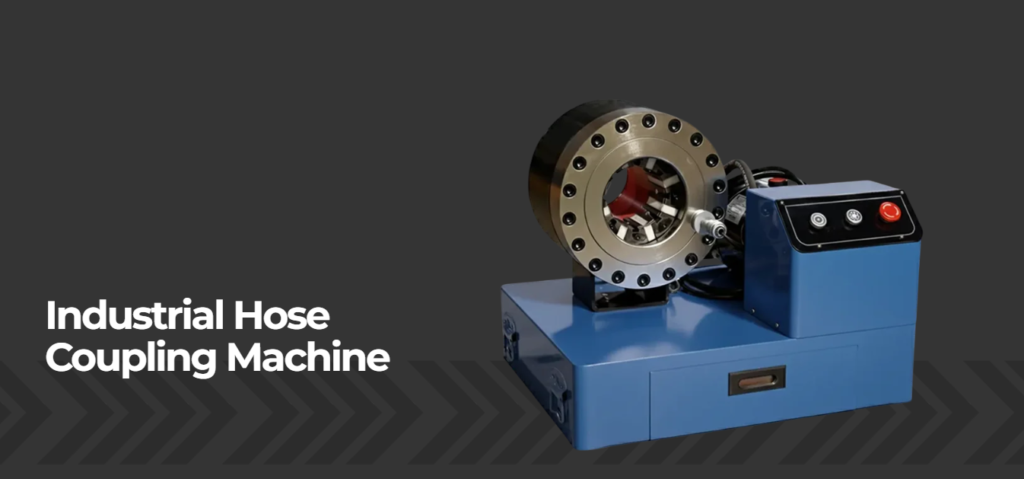
3. Floor-Standing Hydraulic Crimpers
Heavy-duty industrial machines built for high-volume production or large hose assemblies. They handle the widest range of hose sizes and deliver the highest crimping forces.
- Typical capacity: Up to 4-inch and above
- Crimping force: 30–100+ tonnes
This guide covers the general process applicable to all three types, with specific notes where procedures differ between them.
🔗 Explore Pluz Group’s full range of hydraulic hose coupling machines — from portable handheld units to industrial floor-standing crimpers.
Safety First: Essential Precautions Before You Begin
Hydraulic crimpers generate tremendous force — often between 10 and 100 tonnes. Therefore, treat them with the same respect you give any high-force industrial equipment.
Personal Protective Equipment (PPE):
- Safety glasses or face shield — mandatory at all times
- Cut-resistant work gloves
- Steel-toed boots
- Hearing protection for high-volume operations
Workspace Safety:
- Keep the work area clean and well lit
- Ensure the crimper sits on a stable, level surface
- Keep fingers and body parts clear of the crimping jaws
- Never bypass safety guards or interlocks
- Always disconnect power or release pressure before changing dies
Hydraulic Safety:
- Check hydraulic fluid levels before every use
- Inspect hoses for visible damage or leaks
- Never exceed the tool’s rated working pressure
- Release all pressure fully before opening the tool
Material Handling:
- Use the correct lifting technique for heavy hose assemblies
- Secure long hoses to prevent them from swinging during crimping
- Keep hose ends clean and free of debris at all times
Tools and Materials You Will Need
Gather everything before you start. Stopping mid-assembly to find a missing tool leads to mistakes and contamination.
Essential equipment:
- Hydraulic crimping tool with appropriate dies
- Hose cutting tool or dedicated hose saw
- Measuring tape or ruler
- Deburring tool or fine file
- Cleaning solvent and clean rags
- Hose assembly instructions or crimp specification chart
Materials:
- Hydraulic hose — correct size and pressure rating for the application
- Hose fittings — barbed insert or mandrel type
- Ferrules or crimp sleeves — matched to hose and fitting size
- Protective end caps — optional, for storage of finished assemblies
Reference materials:
- Crimp specification chart from the fitting manufacturer — this is critical
- Hose and fitting compatibility chart
- Die selection guide
Step 1: Select the Correct Die for Your Hydraulic Crimping Tool
The crimping die determines the final diameter and shape of the compressed ferrule. Consequently, using the wrong die results in leaks or fitting failure — so this step demands care.
How to choose the right die:
First, check the ferrule size markings — for example, “-8” indicates a 1/2-inch hose. Next, consult the crimp specification chart provided by the fitting manufacturer. This chart tells you the exact crimp diameter required for each hose and fitting combination. Finally, match the die to that specification — each die is marked with the diameter it produces, such as “0.750” for a 0.750-inch crimp.
Common mistake to avoid: Never guess the die size. A crimp that is too large will leak. One that is too small will damage the hose internally and cause early failure.
Installing the die:
- Release all hydraulic pressure completely
- Remove the safety pin or locking mechanism
- Slide out the existing die set
- Insert the new die set — confirm it is fully seated
- Replace the safety pin or lock
- Test by performing a partial crimp on scrap material before starting production
Step 2: Cut the Hose to Length
Accurate hose length is critical for a proper, leak-free assembly. Rushing this step causes problems that cannot be corrected later.
Cutting procedure:
Start by measuring carefully — account for the length each fitting will occupy inside the hose, typically two to four inches per end. Then mark the cut line clearly using a marker or tape around the full hose circumference. Use a proper hose cutting tool or dedicated hose saw, since clean, square cuts are essential — avoid using a hacksaw, as it leaves burrs that contaminate the hose interior.
After cutting, inspect the hose end. The inner tube should be visible and intact, and no outer cover should extend past the reinforcement layer.
Pro tip: For wire-braided hoses, check that no wire strands protrude from the cut end. Trim any loose wires carefully with side cutters before moving to the next step.
Step 3: Prepare the Hose End
Proper preparation prevents contamination and ensures a tight, reliable seal. Even a small amount of debris trapped inside the hose can cause system failure later.
Preparation steps:
- Strip the outer cover if the fitting instructions require it — some hoses need the cover peeled back slightly before fitting insertion
- Deburr the hose end using a deburring tool or fine file to smooth any rough edges from the cut
- Clean the hose interior by blowing out debris with compressed air, then wiping the outside with a clean, solvent-dampened rag
- Inspect for damage — the reinforcement layers must be intact and uncrushed
The hose end should be smooth, clean, and perfectly square before you proceed. Any contamination inside the assembly will be trapped there permanently.
Step 4: Install the Ferrule
The ferrule — also called the crimp sleeve — goes onto the hose before you insert the fitting.
Installation procedure:
Slide the ferrule onto the hose. It should move freely but fit snugly against the hose outer cover. Position it back from the hose end to leave room for the fitting insert — usually one to two inches. Additionally, check the orientation: some ferrules are directional, with a tapered end that faces a specific way. Always check the fitting instructions before proceeding.
Do not attempt to crimp yet. The ferrule stays loose in this position until the fitting is fully inserted.
Common error: Installing the ferrule in the wrong direction, or forgetting it entirely before inserting the fitting. Both mistakes mean cutting off the fitting and starting over with new materials.
Step 5: Insert the Fitting
The fitting — a barbed insert or mandrel — goes inside the hose and locks the entire assembly together when crimped.
Insertion procedure:
Lubricate the fitting lightly if the manufacturer recommends it — soapy water or a small amount of assembly lubricant is usually sufficient. Align the fitting straight with the hose axis, then push it firmly inward until the barbs or serrations fully engage the hose inner tube. Most fittings include a depth mark or shoulder — the hose end should reach this point exactly.
Verify that the fitting is straight and centred in the hose, not angled to one side. For larger hoses, a vice or purpose-built insertion tool makes this step easier. However, never use a hammer to drive the fitting in — this damages the fitting geometry and compromises the final seal.
Critical check: The fitting must be fully seated. A partially inserted fitting will cause the crimp to fail under pressure.
Step 6: Position the Ferrule for Crimping
With the fitting fully in place, slide the ferrule forward into its crimping position.
Positioning steps:
Move the ferrule forward over the fitting until it covers the entire barbed or serrated section. Align it with any crimp location marks on the fitting body — most manufacturers mark the correct ferrule position clearly. Moreover, ensure the ferrule provides full coverage of all barbs, with no exposed serrations visible.
Finally, check the gap between the ferrule and the fitting hex or body. There should be a small gap — typically 1/16 to 1/8 inch — between them. If there is no gap, or if the ferrule overlaps the fitting body, reposition it before loading the assembly into the crimper.
Step 7: Load the Assembly into the Hydraulic Crimping Tool
Correct positioning inside the crimper ensures an even, centred crimp. An off-centre crimp creates weak spots that fail under pressure.
Loading procedure:
Open the crimper jaws fully using the release valve or manual release handle. Centre the ferrule inside the crimping die — not too far forward, not too far back. Align the hose so it runs perpendicular to the die jaws, not at an angle. Check that the fitting body and hose have adequate clearance and will not contact the crimper frame during the stroke.
For long hose assemblies, use a hose support stand or ask a colleague to support the free end. Sagging under its own weight can cause the assembly to shift during crimping.
Step 8: Perform the Crimp
This is the most important step in the entire process. Take your time and work methodically.
Crimping procedure:
Before activating the crimper, do a final check: verify the die selection, confirm the ferrule position, and confirm the hose alignment. Close the safety guard if your machine has one.
For manual crimpers, pump the handle with a steady, even rhythm. For powered crimpers, press the foot pedal or activate the control panel. As the die jaws close, watch the crimp forming evenly around the ferrule. Continue until the crimp diameter matches the specification — most crimpers include a built-in gauge or automatic stop that prevents over-crimping.
When the crimp is complete, open the release valve to retract the die jaws, then carefully remove the finished assembly.
For automatic crimpers: Enter the target crimp diameter on the control panel before starting. The machine will stop automatically at the correct point, eliminating the need for manual gauging during each cycle.
Timing: A typical crimp takes between 10 and 30 seconds, depending on hose size and crimper type.
Step 9: Inspect the Crimped Assembly
Quality control is not optional — inspect every single crimp before it leaves your hands.
Inspection checklist:
- ✅ Measure the crimp diameter — use calipers or a crimp gauge and compare against the specification. Tolerance is typically ±0.010 inches
- ✅ Check for uniform compression — the ferrule should be compressed evenly all the way around, with no flat spots or bulges
- ✅ Look for cracks or splits — inspect the full ferrule surface carefully
- ✅ Verify ferrule position — confirm the ferrule did not shift during crimping
- ✅ Inspect the hose — the hose body should not be collapsed, kinked, or deformed
- ✅ Check the fitting — threads and hex flats must be undamaged and functional
Signs of a good crimp: Smooth, even compression around the full circumference; visible die pattern indentations on the ferrule; no gap between ferrule and hose; fitting is secure and does not rotate.
Signs of a bad crimp: Crimp diameter outside specification; uneven compression; cracks in the ferrule; ferrule shifted or skewed; hose crushed or kinked near the crimp zone.
If the crimp fails any part of this inspection, cut it off completely and start again with fresh materials. Never put a faulty crimped assembly into service.
Step 10: Pressure Test the Finished Assembly
For any critical application — hydraulic machinery, high-pressure systems, safety-related components — pressure testing is essential before the assembly enters service.
Testing procedure:
Install end caps or connect the assembly to a hydraulic test bench. Gradually increase pressure in stages — start at 25% of the rated working pressure, then step up to 50%, 75%, and finally 100%. Hold at full working pressure for 30 to 60 seconds. During this time, inspect every crimp point carefully for fluid seepage or visible swelling.
Test pressure: Typically 1.5 to 2 times the hose’s maximum working pressure — check the manufacturer’s specification for each hose type.
If the assembly leaks at any pressure level, the crimp is defective. Cut it off, install a new ferrule, and recrimp the assembly before testing again.
🔗 For pressure testing standards and hose assembly specifications, refer to SAE International hydraulic hose standards and ISO 18752 hydraulic hose performance requirements.
Common Mistakes and How to Avoid Them
1. Wrong die size — Always verify die selection against the crimp specification chart before loading any assembly into the crimper.
2. Partial fitting insertion — Check insertion depth before crimping every time. Use an insertion tool for stubborn fittings rather than forcing them with a hammer.
3. Dirty hose interior — Blow out and wipe down every hose end before assembly. Contamination trapped inside the hose causes system failure downstream.
4. Off-centre crimp — Ensure the hose runs perpendicular to the die jaws and the ferrule is centred in the die before activating the crimper.
5. Over-crimping — Stop exactly at the specified crimp diameter. Use the built-in gauge or auto-stop feature rather than estimating by feel.
6. Skipping inspection — Inspect every crimp with callipers and a full visual check. One defective assembly in service is far more costly than the time it takes for inspection.
Maintenance Tips for Your Hydraulic Crimping Tool
Consistent maintenance keeps your hydraulic crimping tool accurate, reliable, and safe.
Daily:
- Wipe down dies and jaws after each shift
- Check hydraulic fluid level
- Inspect for visible leaks
Weekly:
- Clean dies thoroughly with solvent
- Lubricate moving parts according to the manufacturer’s schedule
- Check mechanical alignment
Monthly:
- Inspect hydraulic hoses for wear or cracking
- Test the pressure relief valve function
- Calibrate the crimp gauge against a known reference
Annually:
- Full professional calibration check
- Replace hydraulic fluid completely
- Comprehensive inspection by a qualified technician
Proper maintenance not only extends tool life — it also ensures that every crimp you produce meets specification consistently.
🔗 Need replacement dies, seal kits, or maintenance support for your crimping equipment? Contact the Pluz Group technical team for fast assistance.
Troubleshooting Common Problems
Crimper will not build pressure: Check the hydraulic fluid level first. Then inspect for leaks in hoses or seals, verify the release valve is fully closed, and check for air in the system — bleed if necessary.
Uneven crimp: Check hose alignment in the die and confirm the hose runs perfectly straight. Additionally, inspect the die itself for wear or damage that may cause uneven closing.
Ferrule cracks during crimping: This usually indicates over-crimping — check the specification. Alternatively, the ferrule may be the wrong material for the application, or the die may have developed sharp edges that need deburring.
Crimp diameter will not reach specification: Verify the correct die is installed, check the die for wear and replace if needed, calibrate the crimp gauge, and confirm the ferrule is the correct size for the hose.
When to Replace Crimping Dies
Crimping dies wear out gradually through use. Replace them when:
- The crimp diameter is consistently outside the specification, even after calibration
- The die surface shows visible cracks, chips, or pitting
- The surface finish has become rough and irregular
- The die has reached approximately 10,000 to 20,000 crimping cycles — this varies by manufacturer
Using worn dies produces inconsistent crimps that may look acceptable but fail under pressure in service. Therefore, do not delay die replacement when these signs appear.
Best Practices for Professional Hydraulic Crimping Results
Keep detailed records — Log crimp specifications, die changes, and maintenance events for every machine in your workshop.
Use genuine parts — OEM ferrules and fittings ensure material compatibility and predictable crimp results. Mixing brands introduces variables that affect quality.
Train all operators — Everyone who uses the hydraulic crimping tool should complete proper training before working on production assemblies.
Build a crimp specification library — Keep all manufacturer spec charts organised, accessible, and up to date. A missing chart leads to guesswork.
Batch similar work — Group crimps that use the same die to minimise changeover time and the risk of installing the wrong die mid-session.
Label completed assemblies — Mark each finished hose with the pressure rating, assembly date, and operator name for full traceability.
Summary: The Three Keys to Every Successful Crimp
Using a hydraulic crimping tool correctly is a skill that sharpens with practice and attention to process. Follow these steps consistently, and you will produce hose assemblies that are safe, leak-free, and reliable every time.
- Preparation — Correct hose cutting, cleaning, and ferrule installation
- Precision — Right die selection and accurate crimp diameter
- Inspection — Verify every crimp before it goes into service
Whether you are assembling hydraulic hoses for construction equipment, building custom brake lines, or maintaining industrial pneumatic systems, mastering this process ensures your work meets professional standards on every assembly.
Need a Professional Hydraulic Crimping Tool for Your Workshop?
At Pluz Group, we supply professional-grade hydraulic crimping tools and hose coupling machines for workshops, field service teams, and industrial operations across the UAE and Gulf region. Furthermore, every machine we supply is backed by full local support, replacement parts availability, and operator training.
We offer:
- Handheld, bench-mounted, and floor-standing crimpers
- Complete die sets for all common hose sizes
- Hose cutting and preparation tools
- Technical support and training in English and Arabic
- Replacement parts and after-sales service
👉 Contact Pluz Group today for expert advice on selecting the right hydraulic crimping tool for your operation.