Two technologies now compete for the same bolting jobs across UAE workshops, oil and gas facilities, and construction sites: the battery electric torque wrench and the proven hydraulic torque wrench. Both deliver far more precision than manual tools. However, they achieve that precision in very different ways — and the right choice depends heavily on your application, your environment, and how your team works.
This guide breaks down the strengths and weaknesses of each technology in plain terms. Furthermore, it maps them against the real conditions UAE operations face — extreme heat, dust, remote locations, ATEX zones, and demanding project timelines — so you can make a confident, informed decision.
🔗 Explore Pluz Group’s full range of hydraulic torque wrenches — including ATEX-certified models for UAE oil and gas operations.
What Is a Battery Electric Torque Wrench?
A battery electric torque wrench uses a rechargeable lithium-ion battery pack to drive an electric motor, which applies precise, controlled torque to a fastener. The operator sets a target torque value on the tool’s digital display, and the tool automatically stops when that value is reached.
Modern battery electric torque wrenches are compact, self-contained, and entirely cordless. They need no external pump, no hydraulic hoses, and no compressed air supply. As a result, they are highly portable and quick to set up on almost any job site.
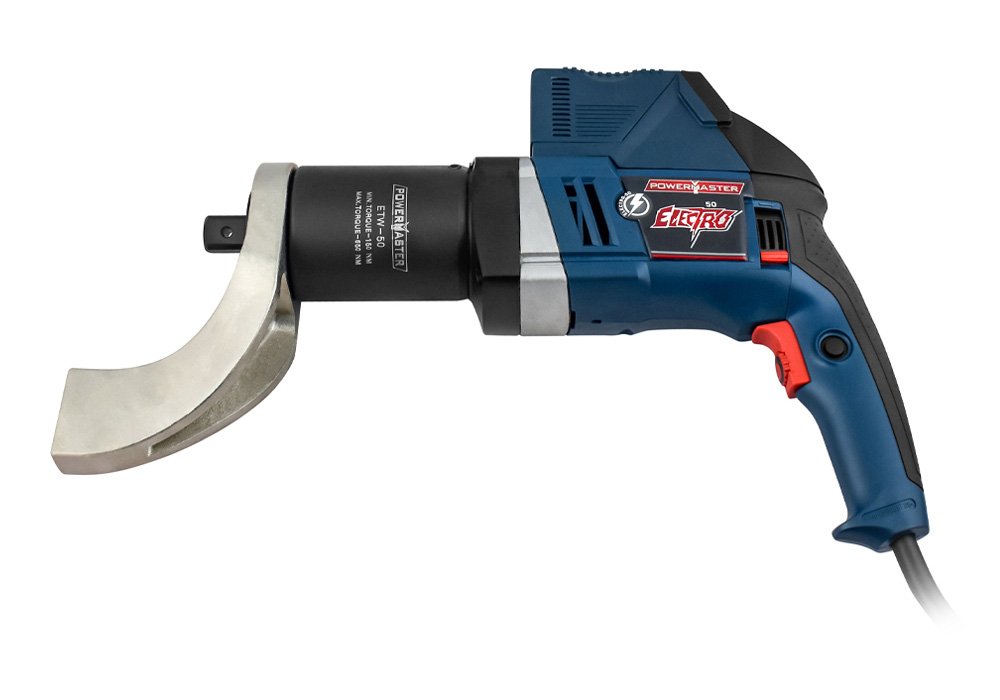
Typical torque range: 100 Nm to approximately 7,000 Nm (high-end models reach up to 10,000 Nm).
Accuracy: ±3% to ±5%, depending on the model and battery charge level.
What Is a Hydraulic Torque Wrench?
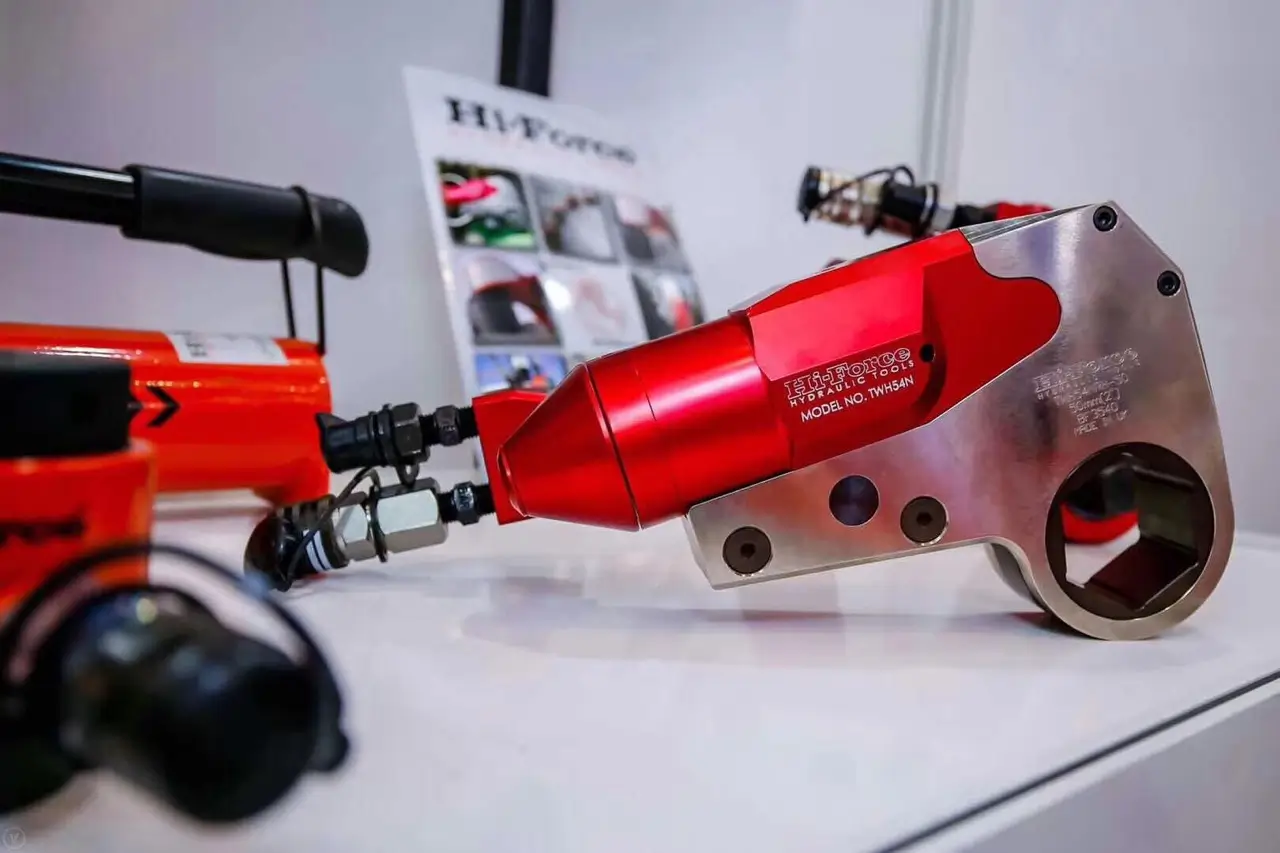
A hydraulic torque wrench uses pressurised hydraulic fluid — delivered by a separate electric, pneumatic, or battery-powered pump — to drive a piston that rotates the fastener. The pump builds pressure up to 700–1,000 bar, and that pressure translates directly into controlled, repeatable torque at the wrench head.
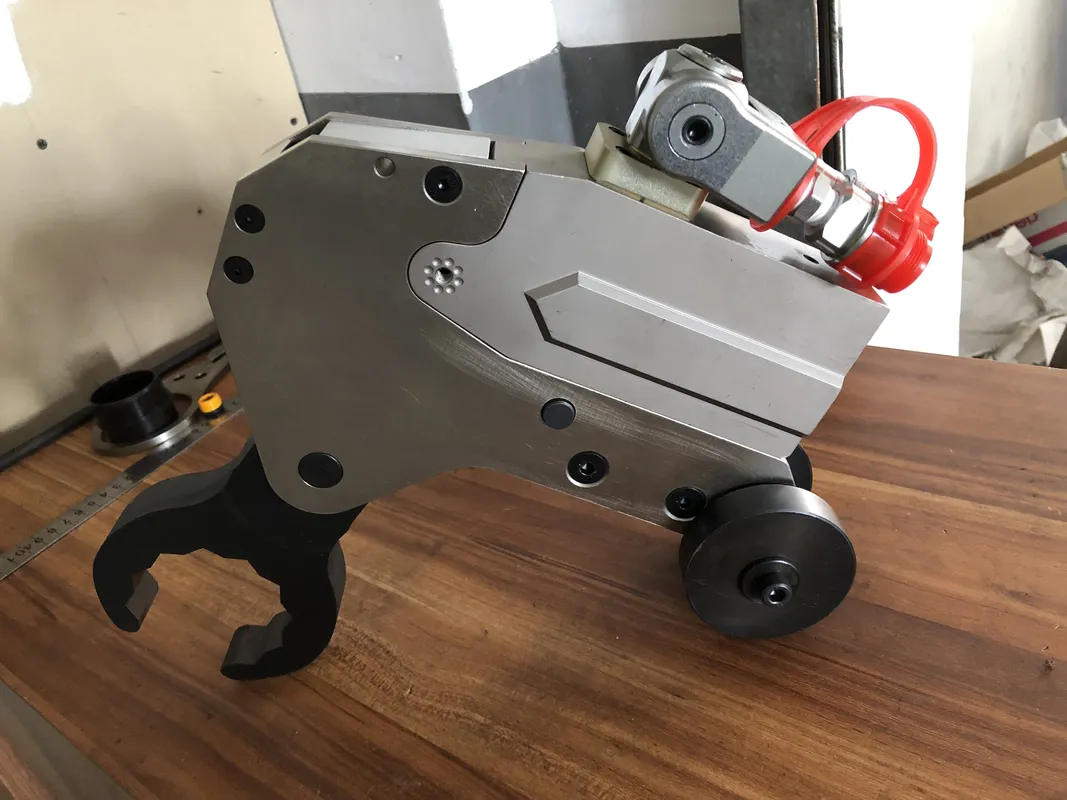
Hydraulic torque wrenches have been the standard for heavy industrial bolting for decades. They are available in square drive and low-profile cassette configurations, and they cover torque ranges that battery tools cannot currently match.
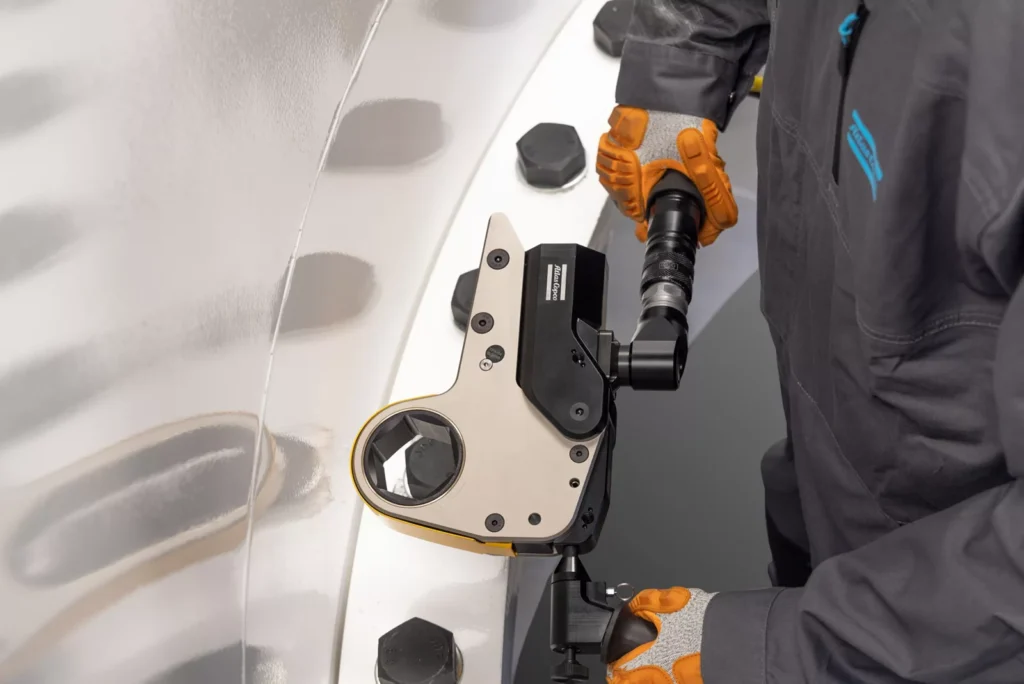
Typical torque range: 200 Nm to 70,000 Nm and above.
Accuracy: ±3%, consistently maintained across the full operating range regardless of ambient temperature or battery state.
Side-by-Side Comparison
| Specification | Battery Electric Torque Wrench | Hydraulic Torque Wrench |
|---|---|---|
| Torque range | 100–10,000 Nm | 200–70,000+ Nm |
| Accuracy | ±3–5% | ±3% |
| Power source | Built-in Li-ion battery | External pump (electric/pneumatic/battery) |
| Setup time | Under 60 seconds | 3–10 minutes (hose and pump setup) |
| Weight (10,000 Nm) | 8–12 kg | 18–26 kg |
| Portability | Excellent — fully self-contained | Moderate — requires pump and hoses |
| ATEX Zone 1 certification | Limited models available | Widely available (pneumatic pumps) |
| UAE heat performance | Good with care | Excellent — proven at 50°C+ |
| Digital data logging | Standard on most models | Available on premium models |
| Hose leak risk | None | Present — requires management |
| Cost (entry level) | AED 12,000–25,000 | AED 18,500–32,000 |
| Battery replacement cost | AED 3,000–6,000 | N/A |
| Best for | Portability, speed, light-to-medium duty | Heavy duty, high torque, harsh environments |
Battery Electric Torque Wrench: Full Pros and Cons
Advantages
1. No hoses, no pump, no setup delays
The biggest practical advantage of a battery electric torque wrench is how fast it is ready to work. There is no pump to position, no hoses to run, and no pressure to build before the first bolt. Consequently, teams operating in fast-paced environments — particularly on maintenance shutdowns where time is money — can move from joint to joint without stopping.
2. True portability for remote and elevated work
Because the power source is built into the tool, battery electric wrenches are ideal for elevated structures, scaffolding, inside vessel skirts, and remote locations without power or air supply. In the UAE context, this makes them particularly well suited for wind turbine work in Ras Al Khaimah, solar farm installations, and maintenance tasks at construction sites that lack a permanent compressor.
3. Built-in digital documentation
Most modern battery electric torque wrenches include onboard data logging, Bluetooth connectivity, and companion apps that record every torque event automatically. As a result, producing the bolting records required for ADNOC, client quality systems, or regulatory audits requires no additional effort from the operator.
4. Lighter weight for operator comfort
A battery electric torque wrench in the 5,000 Nm class typically weighs 8–10 kg as a complete self-contained unit. The equivalent hydraulic setup — wrench head plus pump plus hoses — weighs significantly more and requires two people to carry comfortably. For operations involving many joints across a large structure, that weight difference reduces operator fatigue and speeds up the overall job.
5. No hydraulic fluid contamination risk
In food processing, pharmaceutical manufacturing, and environmentally sensitive areas, any risk of hydraulic fluid leakage is unacceptable. Battery electric torque wrenches carry no hydraulic fluid at all, making them the safe choice in these environments.
Disadvantages
1. Torque range is limited
The most important limitation of current battery electric technology is torque capacity. Most production models top out between 5,000 and 7,000 Nm. High-end models reach approximately 10,000 Nm. However, if your bolting work involves large bore pipeline flanges, blowout preventers, pressure vessel closures, or structural anchors requiring 20,000 Nm or more, a battery electric wrench simply cannot do the job. In contrast, hydraulic torque wrenches cover this range without limitation.
2. Battery performance degrades in UAE heat
Lithium-ion batteries lose capacity as temperature rises. At 45–50°C — common in UAE outdoor and workshop environments during summer — a battery pack that delivers 200 crimps at 25°C may deliver only 130–150 at peak summer temperatures. Furthermore, leaving charged battery packs in direct sunlight or inside unventilated vehicles accelerates degradation and shortens overall battery lifespan.
3. Battery replacement is an ongoing cost
After 300–500 full charge cycles, lithium-ion battery capacity drops noticeably. Battery replacement costs AED 3,000–6,000 per pack, depending on the tool brand and capacity. Over a five-year ownership period, this adds a meaningful cost that does not apply to hydraulic systems.
4. ATEX Zone 1 options are limited
For UAE oil and gas operations where bolting takes place in Zone 1 hazardous areas — around process piping, inside modules handling hydrocarbons, near vents and relief devices — the tool must carry ATEX Category 2G certification. While ATEX-rated battery electric torque wrenches do exist, the range of available models and torque capacities is far narrower than for hydraulic systems with pneumatic pumps. Therefore, if most of your bolting work is in Zone 1, hydraulic tools remain the more practical standard.
5. Accuracy can vary with battery charge level
Unlike hydraulic systems, where torque output is a direct function of pump pressure, battery electric torque depends partly on motor output, which can vary slightly as the battery discharges. Most quality tools compensate for this electronically, but in safety-critical joints requiring ±3% accuracy throughout the full bolt tightening sequence, this is a factor worth verifying against the tool’s specification sheet.
Hydraulic Torque Wrench: Full Pros and Cons
Advantages
1. Unmatched torque range
Hydraulic torque wrenches cover bolting requirements from 200 Nm all the way to 70,000 Nm and above. No battery electric tool currently available matches this range at the high end. As a result, for large bore flanges, offshore jacket pile anchors, pressure vessel head bolts, and any application requiring above 10,000 Nm, hydraulic is the only viable precision bolting technology.
2. Consistent ±3% accuracy regardless of conditions
Because torque output in a hydraulic system is a direct function of fluid pressure — governed by Pascal’s Law — accuracy does not degrade with temperature, usage hours, or component wear in the same way that battery-dependent tools can. Consequently, a hydraulic torque wrench operating at 50°C in a UAE summer delivers the same ±3% accuracy as the same tool operating in a 20°C workshop.
3. Proven ATEX compliance across a wide range
Hydraulic torque wrenches paired with pneumatic pumps have the widest range of ATEX Zone 1 certified configurations available in the market. Moreover, this certification is well understood and accepted by ADNOC, Aramco, and major international operators working in the Gulf — removing any ambiguity from the compliance process.
4. Built for the harshest UAE conditions
Hydraulic systems designed for UAE deployment use ISO VG 46 hydraulic oil, Viton seals rated for sustained high-temperature operation, nitrided cylinders for corrosion resistance in Gulf air, and four-wire spiral hoses. Additionally, the tool itself contains no electronics or battery cells that can degrade from heat exposure. The result is a system that performs reliably through UAE summers year after year.
5. Multi-tool synchronised bolting
For large flange joints requiring simultaneous tightening of multiple bolts — a requirement on many offshore and power generation applications — hydraulic systems support four-tool synchronised manifold setups. A single pump drives four wrenches simultaneously, tightening four bolts at identical torque in one pass. Battery electric tools do not currently support this configuration.
Disadvantages
1. Setup time and logistical overhead
Running hydraulic hoses from a pump to the wrench, positioning the pump, building system pressure, and checking connections before starting work takes 3–10 minutes per setup. In applications where the team moves frequently between joints across a large structure, this overhead adds up. Battery electric tools eliminate this entirely.
2. Hose management in confined spaces
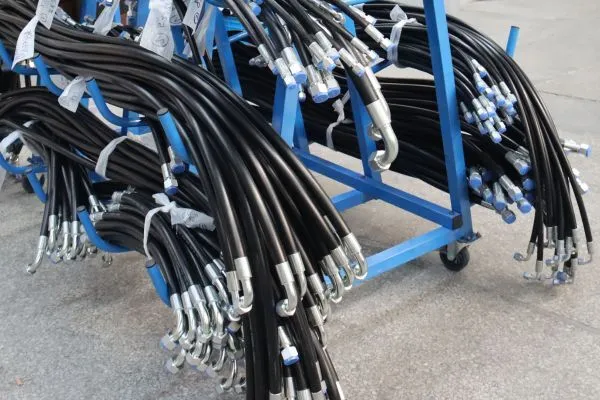
In tight access areas — inside vessel skirts, inside heat exchanger channels, in congested pipe racks — managing hydraulic hoses adds complexity. Hoses can snag, kink, or obstruct movement in ways that a self-contained battery tool does not. Low-profile cassette heads help, but they do not eliminate the hose management challenge.
3. Hydraulic fluid leak risk
Hose connections, pump fittings, and wrench ports are all potential leak points. While quality hydraulic systems are well sealed, a minor leak on an offshore platform or in an ATEX zone requires immediate attention. Furthermore, hydraulic fluid contamination is unacceptable in some environments. Battery electric tools carry no such risk.
4. Higher initial system cost
A complete hydraulic bolting system — wrench, pump, hoses, sockets, and manifold — costs more upfront than an equivalent battery electric tool. For operations where a self-contained battery tool covers the torque range needed, the additional cost of the full hydraulic system may not be justified.
UAE-Specific Considerations
Heat Management for Battery Tools
UAE summer temperatures routinely reach 45–50°C outdoors and 40–45°C inside even air-conditioned workshops. To get reliable service from a battery electric torque wrench in these conditions, follow these steps:
- Store charged battery packs in an air-conditioned vehicle or tool store — never in direct sun or an unventilated van
- Rotate between two battery packs on long jobs, allowing each to cool before recharging
- Avoid charging a hot battery immediately after heavy use — allow it to cool to below 35°C first
- Check the tool manufacturer’s rated operating temperature and confirm it covers UAE summer conditions
- Plan for 20–30% reduced run time per charge during peak summer months
ATEX Zone Mapping for UAE Oil and Gas
Most bolting work on UAE onshore and offshore facilities takes place in one of three zone classifications:
Zone 1 — Explosive atmosphere likely during normal operations. This includes areas around process piping, inside hydrocarbon handling modules, and near vents and relief valves. For Zone 1, hydraulic torque wrenches with pneumatic pumps are the standard and most widely accepted solution. ATEX-rated battery electric tools exist for Zone 1, but verify specific model certification before deploying.
Zone 2 — Explosive atmosphere possible but not expected during normal operations. Both hydraulic with electric pumps and ATEX-rated battery electric tools work in Zone 2, giving you genuine flexibility to choose based on portability and torque requirements.
Non-hazardous areas — Full choice between both technologies with no ATEX constraint.
Dust and Sand Protection
Both technologies need dust and sand protection in UAE conditions. For battery electric tools, verify IP54 or higher ingress protection. For hydraulic tools, look for sealed electrical components on the pump and dust covers for dies and sockets when not in use. Additionally, plan to clean and inspect both types of tool weekly in active workshop environments.
Application Matching: Which Tool for Which Job?
Use a Battery Electric Torque Wrench for:
- Wind turbine assembly and maintenance — elevated work, no power supply, bolts in the 500–5,000 Nm range
- Solar farm structure installation — remote desert locations, fast joint throughput, medium torque
- Scaffolding and structural steelwork — frequent movement between joints, bolt sizes up to M36
- Vessel maintenance in port — inside tanks and holds where hose management is awkward
- Automotive and light industrial — medium torque applications in controlled workshops
- General maintenance in Zone 2 areas — where ATEX-rated battery tools provide cleaner, faster work than hydraulic
- Any application below 7,000 Nm where portability and speed matter more than raw capacity
Use a Hydraulic Torque Wrench for:
- Pipeline flange bolting — large bore joints from 8 inches and above requiring 10,000+ Nm
- Blowout preventer maintenance — API 16A studs at 35,000+ Nm in Zone 1 conditions
- Pressure vessel closures — manway and head bolts at 10,000–80,000 Nm
- Offshore platform structural connections — pile sleeve anchors, jacket connections, riser flanges
- Synchronised multi-bolt tightening — four-tool manifold systems for large flange joints
- Any Zone 1 application where a wide range of ATEX-certified hydraulic configurations is the accepted standard
- Any application above 10,000 Nm where battery electric technology cannot reach
Applications Where Both Work Well — Choose Based on Preference
- Gas turbine maintenance — M20 bolts at 1,000–1,500 Nm: battery tools offer speed and portability; hydraulic offers consistency and ATEX coverage
- Heat exchanger maintenance — medium flanges at 5,000–8,000 Nm: battery tools work if clearance permits; hydraulic low-profile cassettes suit tighter access
- Compressor flange work — Zone 2 areas with medium torque: both technologies viable; battery tools reduce setup time
- Construction infrastructure — M48 bolts at 8,000–12,000 Nm: hydraulic is the safer choice; some high-end battery tools cover this at the top of their range
Cost Comparison Over 5 Years
For a typical UAE workshop running 500 bolting hours per year at torque values under 7,000 Nm:
| Cost Item | Battery Electric | Hydraulic |
|---|---|---|
| Initial purchase (complete kit) | AED 18,000–28,000 | AED 32,000–48,000 |
| Battery replacements (×2 over 5 years) | AED 8,000–14,000 | — |
| Hydraulic oil and seals (annual) | — | AED 3,000–5,000/yr |
| Calibration (annual) | AED 800–1,200/yr | AED 800–1,500/yr |
| 5-year total cost | AED 34,000–55,000 | AED 55,000–97,000 |
For applications within the battery tool’s torque range, the 5-year total cost of ownership favours battery electric tools by a meaningful margin. However, if your work regularly exceeds 7,000 Nm, the hydraulic system is the only option — and the comparison becomes irrelevant.
The Verdict: Which Technology Is Right for Your UAE Operation?
There is no universally correct answer. The right choice depends entirely on your torque range, your access conditions, your ATEX zone classification, and how your team works day to day.
Choose a battery electric torque wrench if:
- Your bolting work stays below 7,000 Nm
- Portability and fast setup matter more than raw torque capacity
- You work in remote locations without reliable power or compressed air
- Your work is in Zone 2 or non-hazardous areas
- Digital documentation and data logging are important to your quality system
Choose a hydraulic torque wrench if:
- Your applications require above 10,000 Nm
- You bolt in Zone 1 hazardous areas regularly
- You need synchronised multi-bolt tightening on large flanges
- Your team works in sustained 50°C conditions where battery performance is a concern
- Proven, accepted ATEX compliance is a hard requirement from your client or regulator
Consider running both technologies if your workshop handles a wide range of jobs — using battery electric tools for portability and speed on medium-duty work, and hydraulic for heavy-duty and Zone 1 applications. Many UAE operations and contractors are moving in this direction, and it is a practical approach to getting the best from each technology.
Pluz Group: Battery Electric and Hydraulic Torque Wrench Solutions for UAE
At Pluz Group, we supply both battery electric and hydraulic torque wrench systems for UAE and Gulf operations — including ATEX-certified configurations for Zone 1 oil and gas work. Our technical team can assess your specific bolting requirements, map them against your ATEX zone classification and torque range, and recommend the right tool or combination of tools for your operation.
We offer:
- Battery electric torque wrenches for portable, medium-duty bolting
- Full hydraulic torque wrench systems from 200 Nm to 100,000+ Nm
- ATEX Zone 1 and Zone 2 certified configurations
- Calibration services with ISO traceability
- Flexible rental and purchase options
- Same-day technical support from our UAE-based engineering team
👉 Contact Pluz Group today for a free technical consultation or to request a quotation for purchase or rental.