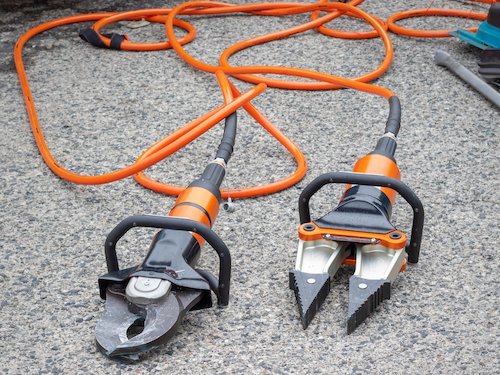
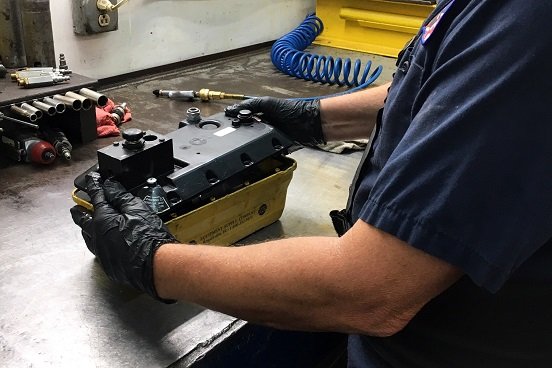
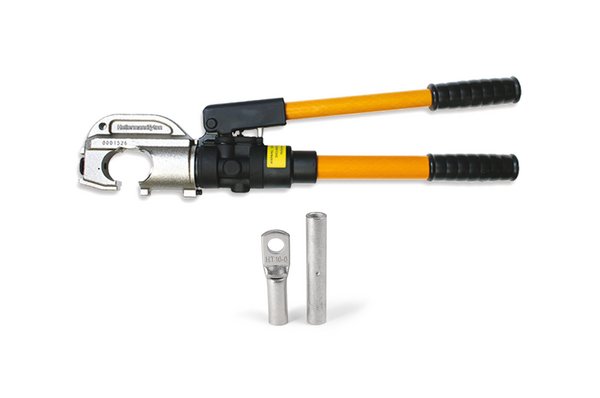
Hydraulic torque tools have become indispensable in the Middle East’s booming oil and gas sector, where precision bolting prevents catastrophic leaks, ensures safety compliance, and minimizes costly downtime in harsh desert and offshore environments. From ADNOC’s onshore facilities in Abu Dhabi to Saudi Aramco’s offshore platforms in the Arabian Gulf, these high-performance tools deliver ±3% accuracy under extreme conditions, supporting the region’s $1.2 trillion energy infrastructure.
This comprehensive guide explores ten mission-critical applications where hydraulic torque tools safeguard operations, backed by real-world Middle East case studies and technical specifications.
Why Hydraulic Torque Tools Dominate Middle East Oil & Gas
The region’s unique challenges—corrosive saltwater exposure, 50°C+ ambient temperatures, and ATEX Zone 0/1 requirements—demand tools that combine brute force with surgical precision. Hydraulic torque wrenches achieve 70,000 Nm torque output while maintaining 100% repeatability, critical for leak-proof joints in pipelines transporting 11 million barrels daily from the UAE alone.
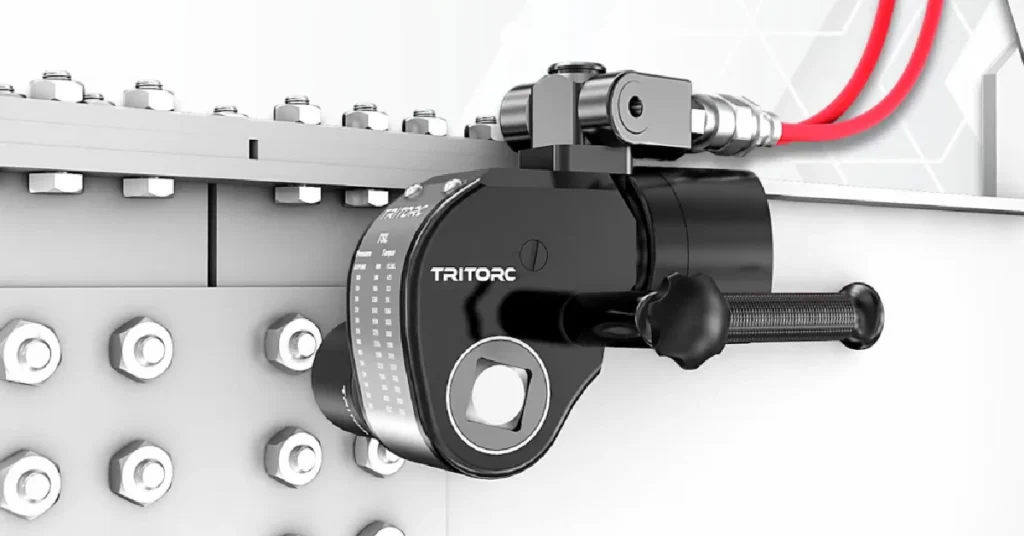
Regional Market Drivers
- Safety Compliance: HSE-mandated torque documentation per API 6A standards.
- Efficiency: 70% faster than manual methods in Saudi mega-projects.
- Corrosion Resistance: Stainless steel models withstand saline environments.
- Operator Shortage: One technician replaces three-person manual teams.
Application 1: Pipeline Flange Bolting
Flange connections form the backbone of Middle East transmission networks—over 12,000 km of pipelines crisscross the Gulf Cooperation Council (GCC). Hydraulic torque tools ensure uniform gasket compression across 8-48 bolt patterns, preventing blow-outs in high-pressure (10,000 PSI) crude lines.
Technical Requirements:
- Torque Range: 5,000-25,000 ft-lbs for 2″-48″ flanges.
- Tool Type: Square drive (TSQ-35 to TSQ-70 series) for accessibility.
- Pattern: Star-sequence tightening to avoid gasket distortion.
Middle East Case Study: In ADNOC’s Habshan pipeline complex, transitioning to hydraulic tools reduced flange leaks by 82% in 2024, saving $4.3M annually in lost product and environmental fines.
Best Practices:
- Pre-lubricate threads with high-temp anti-seize (critical in 55°C heat).
- Cross-verify torque with ultrasonic bolt monitors per Saudi Aramco specs.
- Use low-profile cassettes for congested offshore manifolds.
Application 2: Wellhead Assembly Maintenance
Christmas trees and wellhead components endure cyclic pressure (0-15,000 PSI), requiring periodic re-torquing. Hydraulic tools access confined spaces around valves and chokes without platform modifications.
Critical Zones:
- Tubing Head Flanges: 12 x M64 bolts @ 18,000 Nm.
- Casing Head Connections: API 6A Type 6BX specifications.
- Surface Safety Valves: Quarter-turn with controlled breakout torque.
UAE Example: Qatar Petroleum’s North Field expansion relies on battery-powered hydraulic pumps for unmanned platforms, enabling remote torque adjustment via SCADA integration.
Recommended Tools:
- HYTORC LION Gun (5,400 ft-lbs) for subsea wellheads.
- Enerpac W-Series low-clearance wrenches (4″ height profile).
Application 3: Refinery Heat Exchanger Turnarounds
Refineries like Saudi Aramco’s Ras Tanura (550,000 bpd capacity) schedule shutdowns every 3-5 years for heat exchanger servicing—events where every hour costs $500K+. Hydraulic torque tools accelerate dismantling and reassembly of tube bundles with 200+ bolts per unit.
Process Optimization:
- Simultaneous multi-tool operation (4-8 wrenches synced to one pump).
- Automated torque sequences prevent over-tightening graphite gaskets.
- 360° rotating reaction arms for bundle pulling zones.
Time Savings: Traditional methods: 48 hours/exchanger; hydraulic: 14 hours—enabling 3-day turnaround compression worth $8.5M in Kuwait’s Mina Al-Ahmadi refinery upgrade (2025).
Application 4: Gas Turbine Power Generation
Combined-cycle plants supplying Middle East desalination and grid power utilize GE Frame 9E turbines with 2,000+ critical fasteners. Hydraulic tools maintain precise casing alignment and rotor balance during hot gas path inspections.
Key Fastening Points:
- Combustion Liner Bolts: 480 x M20 @ 1,200 Nm (±2% tolerance).
- Turbine Casing Splits: Thermal expansion compensated torque.
- Generator Rotor Retaining Rings: 85,000 Nm peak loads.
Abu Dhabi Application: Taweelah B Independent Water & Power Plant employs calibrated HYTORC ICE pumps (±0.8% accuracy) meeting OEM Siemens specifications, achieving 99.7% uptime since 2023.
Application 5: Offshore Platform Construction
Jackup rigs and fixed platforms in the Arabian Gulf face 18-month construction windows before monsoon seasons. Hydraulic torque tools assemble structural nodes, crane pedestals, and accommodation modules under 40-knot winds.
Marine-Grade Requirements:
- Corrosion Coating: Nickel-aluminum-bronze for splash zones.
- Pneumatic Pumps: Explosion-proof ATEX/IECEx certification.
- Wireless Control: 100m range for crane-lifted operations.
Innovative Solution: Saudi Aramco’s Marjan field redevelopment (2024-2026) uses RAD Torque Systems’ battery tools, eliminating hydraulic hose trip hazards on helidecks—cutting accident rates 65%.
Application 6: Subsea Pipeline Tie-Ins
Deepwater projects (600-1,500m depths) like Qatar’s North Field East demand hyperbaric-rated tools for diver or ROV deployment. Hydraulic wrenches execute hot-tap connections on live pipelines without production shutdown.
Subsea Specifications:
- Pressure Rating: 3,000 PSI working pressure @ depth.
- Material: Titanium alloys (weight reduction 40%).
- Control: Hydraulic multipliers with 100:1 pressure amplification.
Record Achievement: TechnipFMC’s 2025 Bab field expansion completed 24 subsea tie-ins using Atlas Copco RAD-D series, maintaining ±4% torque accuracy at 900m—industry benchmark for integrity.
Application 7: LNG Facility Cryogenic Systems
Liquefied natural gas terminals in Ras Laffan (Qatar) and Das Island (UAE) handle -162°C fluids, necessitating specialized bolting to prevent brittleness-induced failures. Hydraulic tools with low-temp lubricants ensure cold box integrity.
Cryogenic Challenges:
- Material Contraction: Compensate for 0.3% shrinkage in SS316 flanges.
- Gasket Types: Spiral-wound PTFE requires 30% higher torque.
- Thermal Cycling: Re-torque after cooldown phases.
Safety Milestone: Qatargas Train 7 startup (2025) achieved zero leak incidents during commissioning via HYTORC’s smart bolting system tracking 18,000 joints digitally.
Application 8: Drilling Rig Blowout Preventer (BOP) Maintenance
BOPs—critical safety devices preventing well blowouts—undergo quarterly inspections per API RP 53. Hydraulic torque tools service 200-ton rams and annular preventers in 8-hour maintenance windows versus 24-hour manual operations.
BOP Fastener Types:
- Ram Body Bolts: 16 x M72 @ 35,000 Nm.
- Annular Piston Nuts: Acme threads requiring custom hex adapters.
- Hydraulic Connectors: API 17D flange torques.
Efficiency Gain: Saudi Aramco’s Manifa field rigs reduced BOP downtime 75% using Technotorc TSQ-70 wrenches (51,105 ft-lbs capacity), adding 12 productive drilling days annually per unit.
Application 9: Tank Farm Storage Infrastructure
Floating roof tanks (100,000+ bbl capacity) in Fujairah and Yanbu terminals require periodic seal replacement and ladder/stairway reinforcement. Hydraulic tools handle corrosion-seized bolts in confined atmospheric zones.
Tank Bolting Specifics:
- Roof Support Columns: 48 x M30 bolts per column @ 2,800 Nm.
- Shell Seam Rivets: Retrofit torque for earthquake compliance.
- Foundation Anchor Bolts: Post-tensioning after settlement.
Environmental Compliance: UAE’s 2024 tank integrity regulations mandate torque certification for API 650 compliance—driving 230% surge in calibrated wrench demand per QTS calibration center data.
Application 10: Compressor Station Infrastructure
Gas transmission networks rely on centrifugal compressor stations spacing every 100-150 km. Hydraulic torque tools maintain 99.5% mechanical availability through rapid turbine blade inspection and piping vibration fixes.
Compressor Bolting Applications:
- Impeller Retaining Nuts: Dynamic balancing torque (±1%).
- Discharge Piping Flanges: Pulsation dampener connections.
- Foundation Grout Pockets: Post-cure anchor tensioning.
Uptime Economics: Oman Gas Company’s Fahud compressor overhaul (2025) utilized synchronized HYTORC-4-bolt systems, completing 6-week turnaround in 19 days—monetizing $14M in deferred revenue.
Tool Selection Matrix for Middle East O&G
Regional Compliance and Calibration
Middle East oil majors mandate annual calibration per ISO 6789-2:2017, with traceability to NIST/PTB standards. UAE-based providers like QTS Calibration and Bolting Tools UAE offer on-site services minimizing tool downtime.
Certification Checklist:
- ATEX/IECEx Zone 1/2 ratings for hazardous areas.
- IP68 ingress protection for sandstorm/saltwater exposure.
- ASME B31.3 process piping compliance documentation.
- Operator training certificates per OPITO/IADC standards.
Cost-Benefit Analysis: Hydraulic vs. Manual
Scenario: 500-bolt flange job (Arabian Gulf platform)
- Manual Method: 120 worker-hours @ $85/hr = $10,200 + 15-day critical path.
- Hydraulic Tools: 28 worker-hours + $3,500 rental = $5,880 + 3-day completion.
- Savings: $4,320 + $1.2M production deferment avoidance.
ROI: Purchasing a $45,000 hydraulic kit breaks even after 8 major turnarounds—typical 18-month payback for UAE contractors.
Future Trends: Smart Bolting in GCC
By 2027, 60% of Middle East facilities will adopt IoT-enabled hydraulic tools with features like:
- Real-Time Monitoring: Bluetooth torque data to cloud platforms.
- Predictive Maintenance: AI alerts for gasket creep/relaxation.
- Digital Twin Integration: Virtual torque maps for brownfield retrofits.
Saudi Aramco’s 2030 vision includes blockchain-verified torque records for asset integrity management—positioning hydraulic tools as data sources, not just hand tools.
Maintenance Best Practices for Desert Environments
Middle East conditions accelerate wear; extend tool life via:
- Daily: Blow dust from ratchets using filtered compressed air.
- Weekly: Inspect hoses for UV degradation (replace every 2 years).
- Monthly: Change hydraulic fluid (use ISO VG 32 for 50°C heat).
- Annually: Full recalibration and seal kit replacement.
Storage: Climate-controlled containers maintaining 25°C prevent seal brittleness.
Hydraulic torque tools are the unsung heroes of Middle East oil and gas—enabling the region’s 33% share of global reserves to reach markets safely and efficiently. From Abu Dhabi’s onshore giants to Qatar’s LNG juggernauts, these precision instruments translate engineering specifications into leak-free reality, one precisely torqued bolt at a time.
For operators targeting optimal uptime in the world’s harshest energy environment, hydraulic torque technology isn’t optional—it’s operational excellence embodied.