Choosing whether to buy or rent hydraulic workshop equipment can determine whether a project yields healthy margins or eats into your profit. In the UAE, where project timelines are tight, labour costs are high, and equipment sits under 50°C sun, treating this as a financial decision—not just a technical one—is essential.
This guide walks UAE contractors and workshop owners through a clear, numbers-driven framework for deciding when to buy and when to rent four core tools: Workshop Press, Hose Crimping Machine, Hydraulic Torque Wrench, and Hydraulic Cylinder Jack.
Why This Decision Matters for UAE Contractors
For most companies, hydraulic tools fall into one of two categories:
- Revenue generators: You use them frequently, bill for them, and they directly influence project capacity (e.g., torque wrench for shutdowns, crimper for hose and cable work).
- Support equipment: You need them occasionally, often for specific tasks or short-term projects.
Because daily rental rates in the UAE are relatively high compared to purchase cost, the cumulative rental spend can quickly exceed the price of owning the equipment. On the other hand, buying gear that sits idle for most of the year locks cash into metal instead of people, marketing, or vehicles.
So, you need a simple way to see when each tool crosses from “better rented” to “must own.”
Simple Break-Even Calculator (How to Use It)
Use this logic for any hydraulic tool:
- Find the purchase price of the tool.
- Check the daily rental rate (or per-project rate).
- Apply this formula:
Break-even usage days per year=Daily rental ratePurchase price
If you expect to use a tool more days than the break-even number in a year, ownership usually makes more financial sense. If your usage is below that threshold, rental is typically cheaper and more flexible.
You can plug in your own numbers, but to save you time, the rest of this guide uses realistic UAE pricing and ready-made break-even figures.
Tool 1: Workshop Press 50‑Ton
Assumed pricing (UAE 2026):
- Purchase: AED 12,000
- Rental: AED 250 per day
- Break-even usage: 48 days per year
When It Makes Sense to Rent
You should rent a 50‑ton workshop press when:
- You only need heavy pressing for periodic projects (e.g., a few frame straightening jobs or bearing changes during major turnarounds).
- You’re a mobile contractor who mostly works on-site and only occasionally returns to a fixed workshop.
- You’re trialing a new service (e.g., adding heavy axle/bearing work) and want to test demand before committing capital.
In practice, if your realistic estimate is 20–30 days of usage per year, renting at AED 250/day keeps your cash free and gives you the flexibility to swap to a larger or smaller press as needed.
When It Makes Sense to Buy
Buying becomes smarter when:
- You run a busy garage or fabrication shop where tasks like bearing pressing, bushing installation, frame straightening, and plate bending happen weekly.
- You plan to offer pressing as a billed service to other workshops in your area.
- You want to eliminate delays caused by tool availability or delivery schedules.
If you use the press one day a week (around 52 days/year), you’re already beyond the 48‑day break-even. After that, every pressing job is effectively done on an asset that has already paid for itself.
Extra Financial Considerations
- Maintenance & calibration: For a workshop press, annual maintenance is relatively modest—seal inspections, oil changes, and gauge checks. These costs are typically lower than the logistics and downtime costs associated with repeated rentals.
- Opportunity to upsell: A permanent in-house press lets you charge for related services like bearing sourcing, shaft machining coordination, and full “repair packages,” increasing average invoice value.
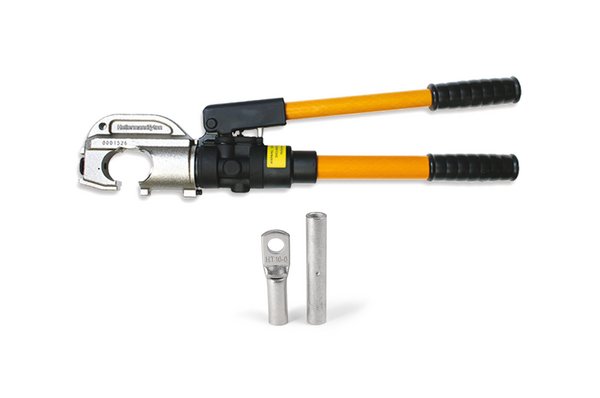
Tool 2: Hose Crimping Machine DX68
Assumed pricing:
- Purchase: AED 22,000
- Rental: AED 350 per day
- Break-even usage: 63 days per year (or roughly 50+ hoses per month)
When Renting Is the Right Choice
Renting is ideal when:
- You’re a construction contractor who only occasionally needs to crimp hydraulic hoses (for emergency repairs or specific jobs).
- You mainly rely on external hose shops and only require on-site crimping during peak phases of a project.
- You’re launching a new branch or workshop and want to gauge volume first.
If you expect to crimp only 20–30 hoses/month, your usage may correspond to around 20–30 days a year—well below the break-even threshold. In such cases, renting during busy months or for specific projects keeps your overhead low.
When Buying Outperforms Renting
Owning a DX68 or equivalent makes clear sense when:
- You run or plan to run a dedicated hydraulic hose service, serving both your own fleet and external clients.
- Your equipment fleet (excavators, loaders, cranes, pumps) requires frequent hose replacements, and every breakdown means expensive downtime.
- You want to control lead time—instead of waiting for a hose shop, you crimp on-site, get the machine back up, and minimize lost hours.
A good benchmark: if you’re consistently crimping 50+ hoses per month, the combination of saved rental fees and reduced downtime typically pushes you past the break-even inside a year.
Hidden Cost Advantages
- Downtime reduction: If a broken hose stops a machine that generates AED 1,000–2,000/hour in revenue, saving even a few hours per incident quickly justifies owning.
- Extra revenue stream: With your own machine, you can offer hose making as a payable service to other contractors, turning a cost center into a profit center.
- Supply chain resilience: You’re less exposed to hose shop working hours, public holidays, or delivery delays.
Tool 3: Hydraulic Torque Wrench TSQ‑70
Assumed pricing:
- Purchase: AED 32,000
- Rental: AED 400 per day
- Break-even usage: 80 days per year (or around 8+ major turnarounds annually)
When Rental Wins
Hydraulic torque wrenches are specialized tools, and in many companies they are only required for:
- Scheduled shutdowns/turnarounds on pipelines, refineries, power plants.
- Major steel erection projects and high-spec structural joints.
- Occasional high-torque jobs where precision is crucial.
If you handle only a handful of shutdowns per year and don’t maintain critical flanged joints daily, renting offers big benefits:
- You can pick the exact model and size needed for each job.
- You avoid long-term commitment in case your project mix changes.
- Calibration, certification, and ATEX compliance are handled by the rental provider.
For companies with 1–4 major shutdowns a year, rental is usually the financially sound option.
When Ownership Is the Better Investment
Buying a TSQ‑70 (or multiple units) becomes compelling when:
- You are regularly involved in oil & gas, petrochemical, or power projects with strict bolting specifications.
- You handle 8 or more turnarounds per year, or the tool is required for weekly work on critical flange connections, heat exchangers, or structural joints.
- You want to build an in-house bolting team, rather than relying on external service companies.
In such situations, hitting 80+ days of usage per year is common. Once the tool is paid off, every additional day of use simply increases your return on investment.
Long-Term Financial Factors
- Calibration costs: Precision torque tools need annual calibration and occasional servicing; budget for this as part of ownership. Compared to frequent rentals, however, you retain control over schedule and matching tool specs to your needs.
- Higher day rates you can charge: Owning your own wrench can justify premium service rates, especially when you provide documentation, torque charts, and digital records as part of your scope.
- Multi-tool efficiency: If you often need two or more wrenches simultaneously on big flanges, owning a set dramatically shortens turnaround duration, which is far more valuable than the tool cost itself.
Tool 4: Hydraulic Cylinder Jack 50‑Ton
Assumed pricing:
- Purchase: AED 6,500
- Rental: AED 180 per day
- Break-even usage: 36 days per year
When Renting Is Sensible
Renting a 50‑ton cylinder jack is sensible if:
- You only occasionally handle heavy lifting tasks, such as one-off tank lifts, beam jacking, or rare heavy-equipment repairs.
- You’re still deciding what tonnage range you really need for your typical projects.
- You prefer to rent multiple jacks at once for specific lifts instead of owning a fleet that’s idle most of the time.
If you’re using a heavy jack for one or two projects a year, with a total of 10–20 days of actual lifting work, rental keeps your investment light.
When Buying Is the Smart Move
Ownership is usually better when:
- You operate a busy workshop handling heavy trucks, trailers, steel structures, or large machinery.
- Your crew performs lifting or positioning tasks every week, whether for maintenance, alignment, or installations.
- You want the ability to respond instantly to breakdowns or emergencies, without waiting for supplier availability.
At 36+ days of use per year—which could mean one day most weeks—you’ve gone past the break-even. Beyond that point, a jack is a relatively low-cost asset that pays for itself repeatedly.
Financial Extras to Consider
- Durability: With proper maintenance, a good cylinder jack can last many years, making its effective daily cost extremely low once amortized.
- Safety & familiarity: Using the same jack regularly means your team knows its behaviour, accessories, and limits, which reduces risk and improves efficiency.
- Bundling opportunities: You can bundle “lift + repair” as one service, rather than billing only for labour and outsourcing the lifting gear.
4-Tool Bundle Analysis: Press + Crimper + Torque + Jack
Let’s look at the combined picture if you equip a workshop with all four tools.
Total Purchase vs Rental Snapshot
- Workshop Press 50‑ton
Purchase: AED 12,000 | Rental: AED 250/day | Break-even: 48 days - Hose Crimper DX68
Purchase: AED 22,000 | Rental: AED 350/day | Break-even: 63 days - Torque Wrench TSQ‑70
Purchase: AED 32,000 | Rental: AED 400/day | Break-even: 80 days - Cylinder Jack 50‑ton
Purchase: AED 6,500 | Rental: AED 180/day | Break-even: 36 days
Total purchase cost for the full workshop package:
AED 12,000 + 22,000 + 32,000 + 6,500 = AED 72,500
If you rented each tool separately for its break-even days in a year:
- Press: 48 × 250 = AED 12,000
- Crimper: 63 × 350 = AED 22,050
- Torque Wrench: 80 × 400 = AED 32,000
- Jack: 36 × 180 = AED 6,480
Total rental spend at break-even: AED 72,530
You can see the pattern: once your annual usage is at or above the break-even level for all four tools, buying the entire kit essentially pays for itself in a single year compared to renting at those frequencies.
Contractor Profiles: Which Mix Suits You?
- Small Contractor / New Business
- Workshop press: Rent
- Hose crimper: Rent or outsource
- Torque wrench: Rent
- Cylinder jack: Buy one small/medium jack
- Strategy: Keep fixed costs low and focus on labour and marketing while you build volume.
- Growing Workshop / Medium Contractor
- Workshop press: Buy
- Hose crimper: Buy
- Torque wrench: Rent for large shutdowns
- Cylinder jack: Buy 1–2 units
- Strategy: Own the tools used weekly; rent highly specialized gear.
- Specialist Industrial Service Provider (Oil & Gas / Power / Heavy Industry)
- Workshop press: Buy
- Hose crimper: Buy (maybe multiple units, including mobile)
- Torque wrench: Buy, consider more than one size or synchronized sets
- Cylinder jack: Buy multiple jacks of varying capacities
- Strategy: Build a fully equipped, self-reliant service fleet; treat equipment as core assets.
Five-Year Total Cost of Ownership (TCO): The Long View
Buying vs renting isn’t only about the first-year math. Over five years, several factors influence your real costs:
1. Depreciation
Most hydraulic workshop tools can be depreciated over 5–7 years. Even with conservative straight-line depreciation over 5 years:
- A AED 12,000 press effectively “costs” about AED 2,400 per year on your books.
- A AED 32,000 torque wrench comes to AED 6,400 per year, excluding maintenance.
If each tool is heavily used, the effective cost per use becomes very low.
2. Maintenance and Calibration
Plan for:
- Workshop press: Occasional seal replacements, oil changes, gauge checks.
- Hose crimper: Oil, filters, die refurbishment.
- Torque wrench: Annual calibration, seal and pawl servicing.
- Cylinder jack: Seal kits, oil changes, occasional chrome inspection.
Even if you allocate 5–10% of purchase price per year to maintenance and calibration, ownership still tends to be cheaper than frequent rentals once you’re past break-even usage.
3. Downtime and Scheduling
- When you own the tools, you schedule work whenever you’re ready.
- When you rent, you’re tied to supplier availability, delivery slots, and limited fleet sizes.
In the UAE, where a single day of delay on a construction or shutdown job can cost far more than the price of the equipment, avoiding downtime is often the real financial win.
4. Resale Value
Hydraulic tools with good brand names and maintenance records often retain 30–50% of their value after several years. That residual value reduces your true ownership cost if you decide to upgrade.
How to Decide: A Quick 4-Step Checklist
Use this checklist before every significant equipment decision:
- Estimate annual usage for each tool
- Days per year, or
- Number of projects, shutdowns, hoses, or lifts.
- Compare to break-even days
- Press: 48 days/year
- Crimper: 63 days/year
- Torque wrench: 80 days/year
- Jack: 36 days/year
- Factor in strategic value
- Does owning the tool unlock new services or clients?
- Does it reduce risk and downtime in critical operations?
- Does it help you stand out from competitors?
- Decide on a mixed strategy
- Own tools you use weekly or monthly.
- Rent specialized or rarely used tools.
- Review usage annually—if your business grows, you can convert high-rental items into owned assets.
Final Thoughts: Own the Core, Rent the Rest
For UAE contractors and workshops, the smartest approach is rarely “buy everything” or “rent everything.” Instead:
- Own the equipment that forms the backbone of your service offering and hits or exceeds its break-even usage: typically the workshop press, hose crimper, and at least one cylinder jack.
- Rent or phase in high-ticket, specialized tools like top-end hydraulic torque wrenches until your shutdown and bolting workload consistently justifies ownership.
This balanced strategy keeps your capital invested where it brings the most return, protects your margins, and gives you the flexibility to scale as new projects and opportunities appear across the UAE.