When it comes to industrial bolting in the UAE, the hydraulic torque wrench vs tensioner decision is one of the most important choices your engineering team will make. Both tools tighten bolted connections — but they work on completely different principles, perform differently under UAE’s harsh climate conditions, and suit entirely different applications. This guide breaks down everything you need to know to choose the right bolting tool for your operations in 2026.
The United Arab Emirates has become the Middle East’s leading industrial hub, with oil and gas, construction, power generation, and petrochemicals driving large-scale infrastructure development. As projects grow in complexity — from offshore platforms in the Arabian Gulf to wind turbine installations at the Mohammed bin Rashid Al Maktoum Solar Park — so does the need to get bolting decisions right the first time.
Understanding the fundamentals: hydraulic torque wrench vs tensioner
Before comparing the two tools directly, it helps to understand exactly how each one works.
What is a hydraulic torque wrench?
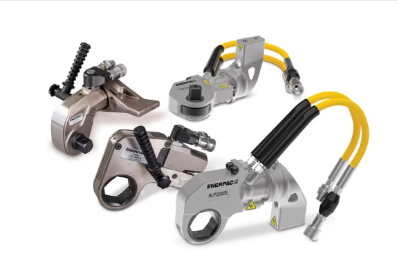
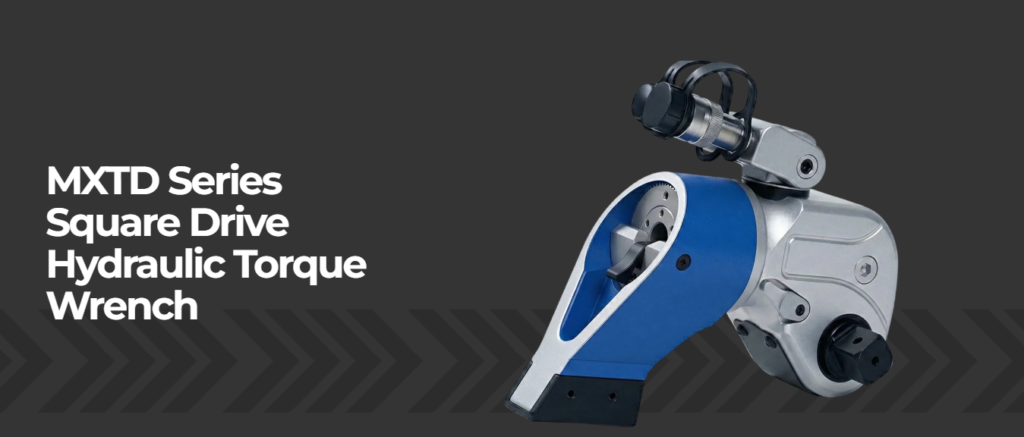
A hydraulic torque wrench applies controlled rotational force to tighten or loosen a bolted connection. Hydraulic pressure converts into torque through a gear mechanism, rotating the nut or bolt head while the tool body braces against a reaction point. Modern versions offer precision, repeatability, and digital monitoring that align with the Industry 4.0 standards increasingly adopted across UAE facilities. You can explore the full range of hydraulic torque wrenches available from Pluz Group to see the options suited to different torque ranges and access conditions.
What is a hydraulic tensioner?
A hydraulic tensioner works on an entirely different principle. Instead of turning the nut, it stretches the bolt itself along its axis, creating precise preload. Once the bolt reaches the exact elongation specification, the nut is turned down by hand with minimal torque. This approach removes many of the friction-related variables that affect traditional torquing methods, offering superior accuracy in critical applications. According to the ASME B31.3 Process Piping standard , achieving consistent bolt preload is a fundamental requirement in pressure piping applications — exactly where tensioners excel.
Key differences: torque wrench vs bolt tensioner in UAE conditions
| Factor | Hydraulic Torque Wrench | Hydraulic Tensioner |
|---|---|---|
| Operating principle | Rotational torque via gear mechanism | Direct axial bolt stretch |
| Bolt load accuracy | ±25% (friction-dependent) | ±3–5% (friction-independent) |
| Radial clearance needed | Yes — for reaction arm swing | Minimal — axial access only |
| Multi-bolt simultaneous use | No — sequential only | Yes — all bolts at once |
| Operator skill required | Standard industrial training | Advanced — bolt elongation knowledge |
| Initial investment (AED) | 15,000 – 75,000 | 40,000 – 200,000 |
| Best suited for | Routine maintenance, pipeline, construction | Critical pressure vessels, turbines, LNG |
Accuracy and operating principle: why the difference matters in UAE
The core distinction between a hydraulic torque wrench and a tensioner creates real-world consequences that are especially significant in UAE’s environment. A torque wrench achieves bolt load through applied rotational force, which must overcome thread friction and under-nut face friction. In UAE conditions — where summer temperatures exceed 50°C and surfaces are exposed to sand, salt air, and humidity — friction coefficients shift constantly. A torque wrench may deliver consistent torque readings while actual bolt preload varies by 25% or more due to changing friction conditions.
Hydraulic tensioners bypass this friction equation entirely. By pulling the bolt into pure axial tension, they maintain accuracy within 3–5%, regardless of thread condition, lubrication, or environmental factors. For ASME pressure vessel flanges common in UAE’s petrochemical sector, this accuracy difference is not a minor technical detail — it directly affects plant safety. The American Petroleum Institute (API) o provides bolting guidelines that acknowledge this distinction in high-pressure applications.
Application suitability across UAE industries
Oil and gas: where both bolting tools are used strategically
The oil and gas sector forms the backbone of the UAE’s economy, and both tools play important roles — but in clearly different scenarios. Hydraulic torque wrenches are the workhorses of routine maintenance, pipeline construction, and applications where bolts are tightened and loosened repeatedly. The large refinery complexes in Ruwais and Jebel Ali rely on them for the majority of standard bolting operations.
Hydraulic tensioners, on the other hand, dominate applications where bolt load accuracy directly affects safety and operational integrity. These include critical reactor vessel closures, main bearing bolts in power generation turbines, and large-diameter flanges in LNG facilities. The ability to tension multiple bolts simultaneously — which is essential for maintaining even load distribution on large-diameter pressure vessel closures — makes tensioners irreplaceable in these scenarios. For more details on hydraulic bolting solutions suited to oil and gas environments, visit Pluz Group’s hydraulic cylinder and lifting solutions.
Power generation
UAE’s energy diversification — from the Barakah Nuclear Energy Plant to large-scale solar installations — creates varied bolting requirements. Gas turbine maintenance, particularly hot gas path components and rotor assembly, increasingly specifies hydraulic tensioning. The precision required for rotating equipment alignment and the severe consequences of fastener failure in these environments justify the additional investment. Wind turbine main bearing bolts, blade retention connections, and tower section joints all benefit from tensioner technology, since uniform preload on large-diameter connections exposed to cyclic loading is non-negotiable for quality assembly.
Construction and infrastructure
UAE’s ongoing infrastructure development involves extensive structural steel fabrication. High-strength structural bolting in critical connections increasingly specifies hydraulic tensioning to ensure structural integrity. Hydraulic torque wrenches remain prevalent for non-critical connections where speed and economy are the primary drivers. Bridge construction and large-span structures benefit especially from tensioners’ ability to eliminate torque scatter when identical bolts in a critical joint must achieve uniform preload.
Space and access considerations for UAE facilities application
UAE’s industrial sites often present unique spatial constraints — offshore platforms in the Arabian Gulf, retrofitted processing plants in mature oil fields, and compact urban facilities all impose real limitations on tool choice. Hydraulic torque wrenches typically need clearance for the reaction arm to brace against an adjacent surface and space for the tool body to operate through at least part of the nut’s rotation. In confined spaces, this can be a significant limitation.
Hydraulic tensioners generally require axial access above the bolt but minimal radial clearance. For turbine casing bolts where overhead access exists but surrounding equipment restricts swing radius, tensioners often provide the only viable solution. However, they do require sufficient bolt protrusion beyond the nut — typically 1.5 to 2 times the bolt diameter — which can be a limitation in flush-mounted applications. The ISO 6789 standard for torque tools provides a useful reference for understanding tool performance requirements across different access conditions.
Speed, efficiency, and project cost in UAE industrial operations
Time is a critical factor in UAE’s competitive industrial landscape. For individual bolt operations, hydraulic torque wrenches are typically faster. A skilled operator can position the tool, reach target torque, and move to the next bolt within minutes. This efficiency makes them the preferred choice for pipeline construction projects stretching across the Emirates, where hundreds of flanges need consistent treatment.
Hydraulic tensioners perform best when multiple bolts must be tightened simultaneously. On large-diameter pressure vessel flanges — common in UAE’s power generation and desalination plants — tensioning all bolts at once ensures perfectly uniform load distribution and reduces the number of tightening passes required. What takes hours with sequential torquing can sometimes be completed in a single tensioner operation.
When a single unplanned shutdown in a UAE refinery can cost millions of dirhams per day, the additional upfront investment in tensioner technology becomes negligible against the operational risk it eliminates.
Economic considerations: total cost of ownership decision factor
Initial investment differs significantly between the two technologies. A high-quality hydraulic torque wrench system for industrial applications typically costs between AED 15,000 and AED 75,000, depending on torque capacity and features. A comparable hydraulic tensioner system — including pump, tensioner, and accessories — ranges from AED 40,000 to AED 200,000, reflecting the precision engineering required.
However, total cost of ownership tells a different story. Torque wrenches generally carry lower maintenance requirements and simpler service procedures. Tensioners require periodic load cell recalibration, inspection of puller screw threads, and careful documentation of tool performance over time. UAE’s established industrial service infrastructure supports both technologies, but tensioner maintenance often demands more specialised expertise. For a complete view of hydraulic equipment and workshop solutions suited to different budget levels, see Pluz Group’s workshop and press equipment range.
Environmental performance: UAE climate challenges for both tools
The Arabian Gulf environment creates specific challenges that influence both tool selection and ongoing performance. Ambient temperatures regularly exceed 45°C during summer, affecting hydraulic fluid viscosity and tool responsiveness. Coastal humidity combines with industrial atmospheres to accelerate corrosion. Wind-blown sand infiltrates mechanisms with remarkable persistence.
Hydraulic torque wrenches operating in these conditions require regular seal checks, high-temperature hydraulic fluid, and corrosion-protected reaction surfaces. Modern torque wrenches designed for Gulf conditions incorporate sealed mechanisms, corrosion-resistant coatings, and expanded operating temperature ranges. Hydraulic tensioners face different vulnerabilities — the precision fit between puller screws and bolt threads can be compromised by sand or corrosion. However, their reduced sensitivity to friction variations gives them an advantage when dealing with corroded or salt-contaminated bolting hardware. The National Physical Laboratory’s torque measurement guidance provides useful context on how environmental factors affect torque accuracy and calibration frequency.
Operator training and workforce considerations in the UAE
The UAE’s diverse industrial workforce includes technicians from across the world with varying experience levels. Hydraulic torque wrenches are generally more accessible for operators with standard bolting training. The process is straightforward: position the tool, engage the reaction point, and apply pressure until target torque is reached. Most modern tools include built-in safety features and error prevention mechanisms that support less experienced operators.
Hydraulic tensioners demand a deeper understanding of bolt elongation principles, stretch value interpretation, and multi-bolt coordination. However, this steeper learning curve pays off in critical applications. UAE companies that invest in comprehensive tensioner training consistently report improved overall bolting quality, as technicians develop a much stronger understanding of fastener mechanics across all their work.
Technology trends shaping the torque wrench vs tensioner debate
Digital transformation is changing both technologies rapidly. Modern hydraulic torque wrenches increasingly feature digital displays, wireless data logging, and integration with asset management platforms. This aligns with the UAE’s National Strategy for Industry and Advanced Technology, which emphasises smart manufacturing and digital industrial infrastructure.
Hydraulic tensioners are following the same path with enhanced digital capabilities. Advanced systems now offer real-time bolt load monitoring, automated tensioning sequences, and cloud-based documentation for permanent records of critical joint assembly. For UAE facilities operating under stringent international safety standards, this digital traceability adds significant audit and compliance value. Battery-powered hydraulic systems are also gaining traction for both tool types, particularly for mobile maintenance work and remote or offshore locations where pneumatic or electric power is limited.
How to decide: hydraulic torque wrench vs tensioner for your UAE application
Most well-run UAE industrial operations use both tools — deploying each where it offers a clear advantage. Use this framework to guide your decision:
- Consequence of failure — If joint failure could cause a safety incident, environmental release, or major equipment damage, tensioners’ superior accuracy is the safer choice. Less critical applications can accept the greater variability of torque wrenches in exchange for speed and lower cost.
- Joint geometry and access — Can a reaction arm find a suitable bracing surface nearby? Is there enough bolt protrusion for a tensioner? Does the application involve multiple bolts that benefit from simultaneous tensioning?
- Operational frequency — For one-time critical assembly or infrequent major shutdowns, renting tensioner services is often the most economical approach. For daily routine bolting, owning hydraulic torque wrench equipment makes more sense.
- Regulatory and specification requirements — ASME PCC-1 guidelines, API standards, and equipment manufacturer specifications increasingly mandate tensioning for certain critical connections. In many cases, the standard removes the choice entirely.
To discuss which bolting solution best fits your specific application, contact the Pluz Group engineering team for a technical consultation at no obligation.
Conclusion: making the right bolting tool decision for UAE operations
The hydraulic torque wrench vs tensioner decision ultimately comes down to the specific demands of your application, your facility’s access constraints, your workforce’s training level, and the regulatory standards that govern your industry. Neither tool is universally superior — each excels in its own domain.
Hydraulic torque wrenches deliver proven efficiency for the vast majority of industrial bolting work across the UAE — from refinery maintenance and pipeline construction to general manufacturing and infrastructure projects. Their versatility, relative simplicity, and lower cost make them indispensable in everyday operations.
Hydraulic tensioners represent the precision solution for applications where accuracy, safety, and reliability cannot be compromised — critical pressure vessel closures, power generation rotating equipment, and structural connections where human life and asset integrity depend on fastener performance.
The most effective UAE industrial operations deploy both technologies strategically, matching tool capability to application requirement. This approach — combining the efficiency of hydraulic torque wrenches with the precision of tensioners — positions companies to meet the full range of challenges in the UAE’s demanding industrial environment while maintaining the highest standards of safety and operational excellence.